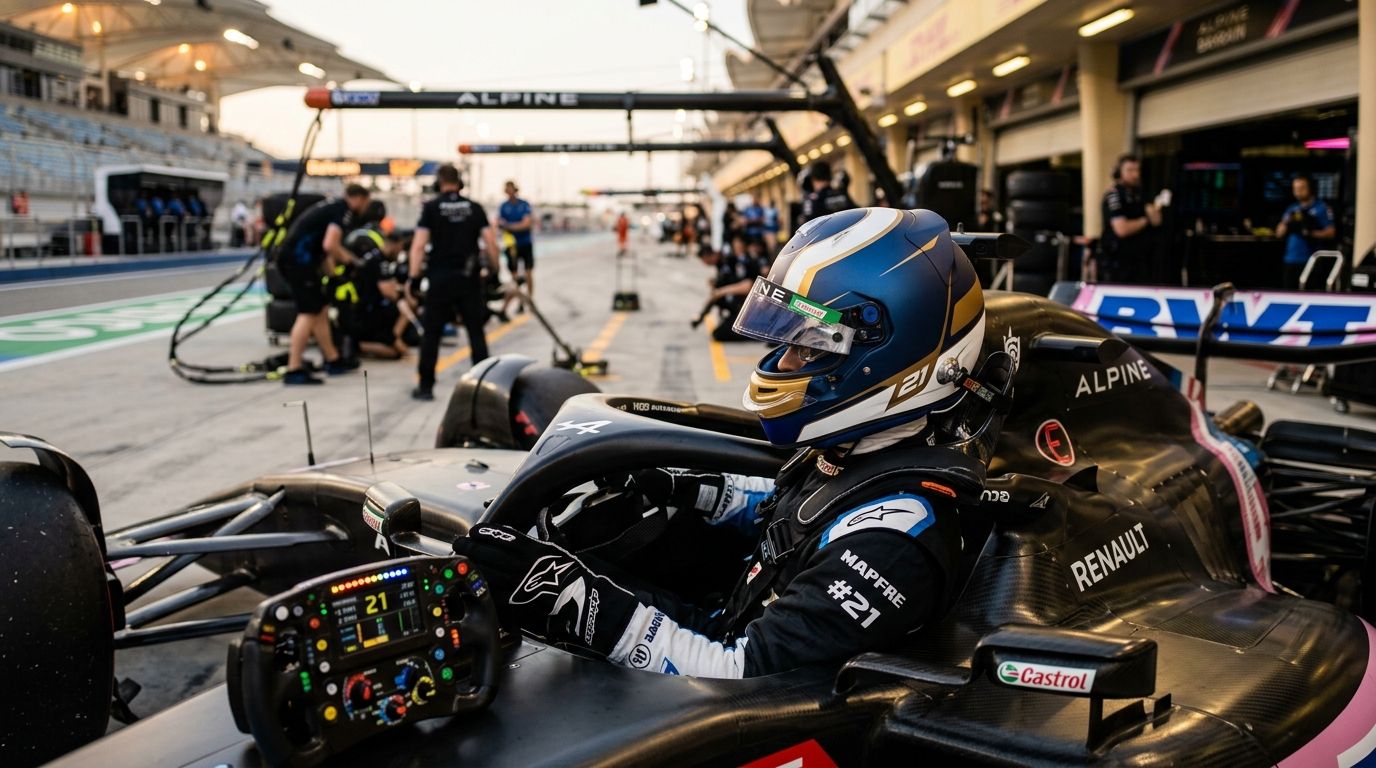
F1 development drivers are the junior and reserve talents signed to a team's pipeline with one job: be ready when a race seat opens. Formula 1 in 2026 runs on scarcity — 20 seats, ten teams, and a queue of Formula 2 and Formula 3 graduates all chasing the same handful of openings, which is why tracking f1 development drivers has become its own skill for fans and bettors alike.
- F1 development drivers move up through FP1 outings, simulator hours, and F2/F3 form — not through hype alone.
- Red Bull, Ferrari, Mercedes, and Alpine run the deepest junior pipelines heading into 2026.
- Superlicence points and current-seat contract status are the two hardest signals to ignore during silly season.
- Betting or fantasy value on a development driver spikes the moment a team confirms an FP1 session, not when rumors start.
Why F1 development drivers matter for fans tracking silly season
Every driver market move traces back to a name that spent a year or two in a simulator seat first. Oscar Piastri sat as Alpine's reserve before landing at McLaren. Liam Lawson served as a Red Bull reserve before getting his own race seat. The pattern repeats every silly season, and it means the fans who track development rosters early get ahead of the story instead of reacting to it.
Bettors care because driver-market moves shift constructor odds, sprint prop lines, and season-long futures the moment a seat is confirmed. Fans care because knowing which junior driver is next in line turns a midseason FP1 session from background noise into appointment viewing. Either way, the development pipeline is the leading indicator, not the seat announcement itself.
Track each team's junior driver program roster
Start with the four programs that actually produce race seats — Red Bull Junior Team, Ferrari Driver Academy, Mercedes Junior Team, and Alpine Academy. Smaller or newer programs exist, but these four have placed drivers on the F1 grid repeatedly over the past several seasons.
- Check each program's current roster size and which drivers hold F2 or F3 seats this season.
- Note which junior drivers already have FP1 mileage — that's the strongest signal a team is grooming them.
- Watch for drivers cut from a program mid-season; that's often the first sign a seat plan changed.
- Cross-reference junior roster moves against the F1 driver market moves for silly season tracker for context on which seats are actually in play.
- Flag any junior driver whose manager is publicly talking to more than one team.
Watch Friday practice (FP1) outings
FP1 sessions are the only points in a race weekend when teams are pushed to run rookies. A development driver getting multiple FP1 outings in one 2026 season is being fast-tracked; one token session and nothing else usually means the team is just satisfying its rookie-running requirement.
- Count FP1 sessions per driver across the season — two or more signals genuine intent.
- Compare FP1 lap times against the regular race driver's practice pace, not just the raw sector sheet.
- Note which circuits a team picks for FP1 outings; low-risk venues get chosen far more often than street tracks.
- Track whether the same development driver gets repeat outings at one team or gets rotated out.
Follow F2 and F3 standings closely
Formula 2 and Formula 3 are the actual proving ground, and standings matter more than highlight-reel overtakes. A driver sitting mid-table in F2 with two wins is a different story than one leading the championship on consistent points finishes.
- Track championship position, not just win totals — consistency reads better to team principals than boom-or-bust results.
- Watch qualifying pace specifically; F1 teams weight one-lap speed heavily when evaluating juniors.
- Note which drivers race for feeder teams with direct F1 relationships, since visibility matters.
- Check how many seasons a driver has already spent in F2 — teams get nervous about drivers stuck there too long.
Monitor simulator and reserve driver roles
Simulator work doesn't show up on a results sheet, but it's where a lot of development driver decisions actually get made. A driver logging heavy simulator hours for a front-running team, even without a single race lap, can leapfrog a driver with better on-track results elsewhere.
- Note which drivers hold official reserve titles — that's a contractual signal, not a rumor.
- Watch for reserve drivers called into practice on short notice; that's a trust signal from the team.
- Track any reserve given multiple appearances at post-season or in-season test events.
- Flag reserve drivers competing full-time in another series — split focus can slow a promotion timeline.
Read contract and manager signals during silly season
Silly season chatter is noisy, but a few signals outweigh the rest: a current race seat holder's contract expiring with no extension announced, a team suddenly running a junior in extra sessions, or a manager confirming talks on the record.
- Track expiring race-seat contracts across the grid — an open seat triggers every development driver's next move.
- Watch team principal press-conference language; a defensive "we're happy with our lineup" often means the opposite.
- Note which managers represent drivers at rival teams, because that overlap shapes negotiations.
- Cross-check rumored moves against the F1 championship contenders for the title race picture — teams fighting for a 2026 title rarely gamble on an unproven driver mid-season.
Check superlicence points before betting on a promotion
A development driver needs 40 superlicence points across a rolling three-year window to race in Formula 1. This is one of the few hard, rule-based checks you can run yourself before assuming a 2026 promotion is close.
- Add up a driver's points from F2, F3, and other eligible series results.
- Remember points expire on a rolling basis — a strong season three years back may no longer count.
- Check whether a driver is near the threshold or comfortably past it; comfortably past it removes the team's legal excuse to wait.
Comparison: following F1 development pipelines
| Program | Best for | Key limitation |
|---|---|---|
| Red Bull Junior Team | Fans wanting the clearest promotion pathway, with two F1 teams to place drivers | Ruthless cuts — drivers get dropped fast when results dip |
| Ferrari Driver Academy | Fans tracking long-term Ferrari succession planning | Slower promotion pace and no sister team to absorb graduates |
| Mercedes Junior Team | Bettors watching simulator-heavy development stories | Very few seats available beyond the works entry |
| Alpine Academy | Fans following a program actively rebuilding its pipeline | Fewer proven graduates than Red Bull or Ferrari |
The quickest read on any team's 2026 development plan is FP1 session frequency — a driver who gets three or more FP1 outings in a single season is being groomed for a seat, full stop.
“A driver who gets three or more FP1 outings in a single season is being groomed for a seat, full stop.”
Common mistakes fans make tracking F1 development drivers
- Chasing win totals instead of consistency. A junior with three F2 wins and six retirements reads worse to a team principal than a driver finishing top-six every round.
- Ignoring superlicence math. Betting on an imminent promotion without checking whether a driver has the 40 points needed is its own rookie mistake.
- Overreacting to one strong FP1 lap. A quick lap on low fuel means little without repeat outings behind it.
- Missing the contract-expiry signal. The biggest predictor of an open seat is an existing driver's deal running out — not a junior's form.
- Treating all junior programs as equal. Red Bull's pipeline moves drivers into seats faster than academies with fewer sister-team slots.
Track every F1 seat move as it breaks
Follow silly season rumors and confirmed moves in one place.
FAQ
What is an F1 development driver?
An F1 development driver is a junior or reserve talent signed to a team's pipeline to build race craft through simulator work, testing, and FP1 outings while waiting for a race seat to open. Most race in F2 or F3 at the same time.
How do F1 development drivers get promoted to a race seat?
Promotion usually follows strong F2 or F3 results, repeated FP1 outings, and an expiring contract on the current race seat holder. Superlicence points must also reach the 40-point threshold before any promotion is legal.
Which F1 teams have the strongest junior driver programs in 2026?
Red Bull Junior Team, Ferrari Driver Academy, Mercedes Junior Team, and Alpine Academy run the deepest pipelines heading into 2026. Red Bull moves drivers fastest because it can place them across two F1 teams.
What is a superlicence and why does it matter for development drivers?
A superlicence is the credential required to race in Formula 1, earned through 40 points accumulated across a rolling three-year window in eligible series. A driver short on points cannot be promoted regardless of form.
How many FP1 sessions does a development driver usually get per season?
It varies by team, but two or more FP1 outings in a single season signals a driver is being fast-tracked. A single session often just satisfies the team's rookie-running requirement.
Is F2 or F3 form a reliable predictor of F1 success?
Consistency in the F2 or F3 standings predicts promotion better than raw win totals. Teams weight steady points finishes and qualifying pace over boom-or-bust results.
Do reserve drivers count as development drivers?
Yes. Reserve drivers hold a contractual title with a team and often log heavy simulator hours, which can matter as much as on-track F2 or F3 results when a seat decision gets made.
When is the best time to bet on a development driver's promotion?
Value shifts hardest the moment a team confirms multiple FP1 sessions or an existing driver's contract expires without renewal. Betting before those confirmed signals is speculation.
One last thing
The 40-point superlicence threshold is the one hard rule in a silly season built on rumor. Check it before trusting any promotion story, because a driver short on points isn't going anywhere in 2026 no matter how loud the chatter gets.