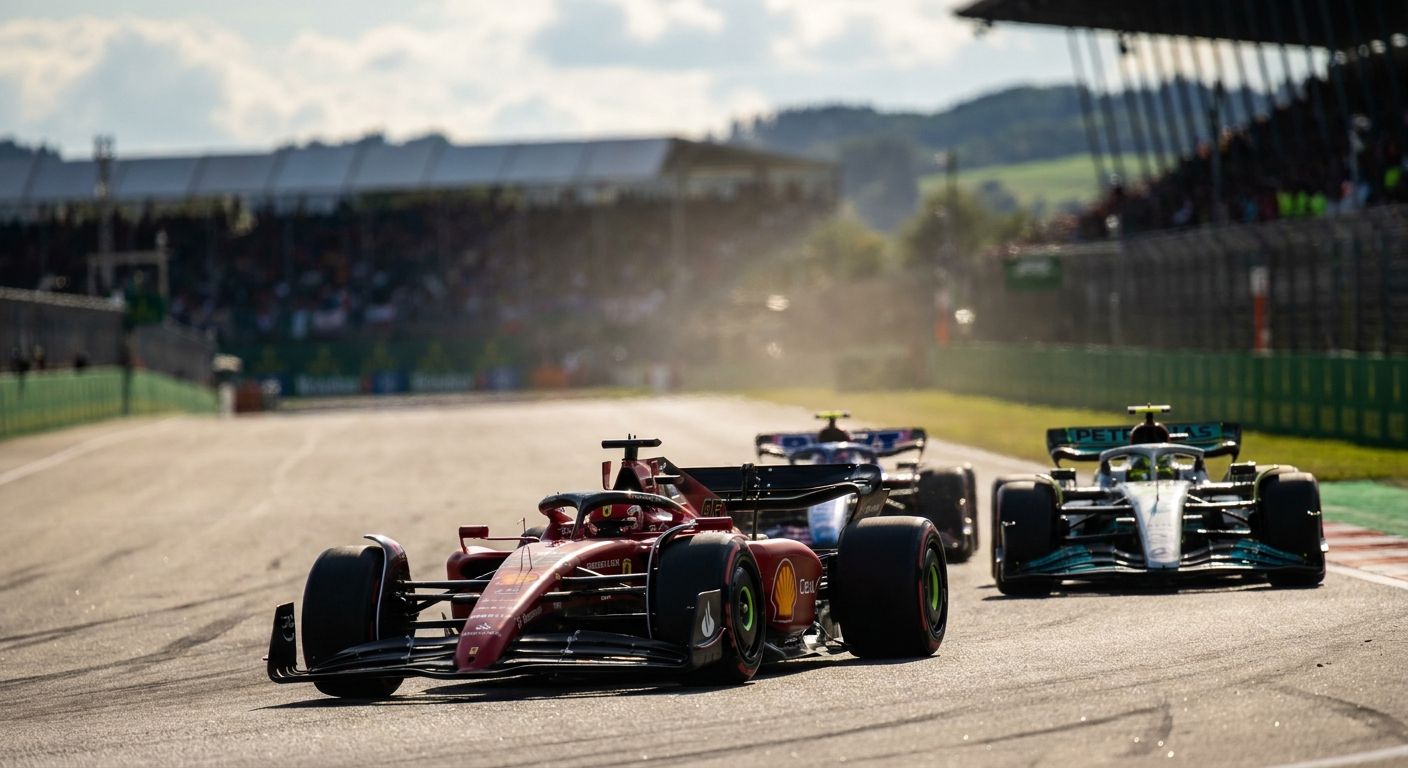
F1 bettors' championship contender list is the shortlist of drivers still mathematically alive to win the title, built with the aim of catching value before the sportsbook line catches up. Casual fans can wait for the points table to sort itself out after the final round; anyone tracking the 2026 title race for betting purposes can't afford that kind of patience.
- The real f1 championship contenders in 2026 are the lead drivers of the teams with genuine upgrade pace — treat everyone else as a spoiler.
- A race win pays 25 points and a sprint win pays 8, so one DNF weekend swings the title math more than three quiet podiums.
- Track qualifying pace separately from race pace before betting outright winner markets — the two rarely move together.
- Fastest lap only pays 1 point if the driver finishes inside the top 10, a detail that trips up casual title-math guesses.
- SportsOrca's race-weekend breakdowns update contender rankings faster than the standings page catches up.
Why F1 championship contenders matter for bettors
The gap between a genuine F1 championship contender and a midfield pretender isn't vibes, it's arithmetic. A race win pays 25 points, second nets 18, and a sprint race win adds 8 more. Miss a weekend with a mechanical DNF and a driver can fall outside the realistic title corridor in a single Sunday.
SportsOrca's F1 coverage tracks that math race by race, and the full slate of predictions and breakdowns sits on the SportsOrca homepage for anyone following the 2026 title fight session to session. That matters because outright winner markets move on rumor and one hot lap, while the actual title math moves on accumulated points and reliability — two very different clocks.
The fastest-lap bonus is the detail casual bettors skip. It only pays if the driver finishes inside the top 10, which means a contender who sets the fastest lap while limping home 12th gets nothing for it. That one rule quietly changes late-race strategy calls for every 2026 title contender fighting for the extra point.
Track the points math every session, not just after Sundays
- Note race-win value (25 points) versus sprint-win value (8 points) whenever the calendar splits a weekend
- Log the gap to the next contender after every checkered flag, not just after triple-header stretches
- Flag any DNF or mechanical retirement immediately, since those swings compound over a full 2026 season
- Separate constructors' points from drivers' points, since a close team fight can mask a two-horse drivers' race
- Recalculate the mathematical clinch scenario once a leader's gap passes two race wins' worth of points
Read team form before you read driver form
- Track which garage brought a genuine upgrade package versus a cosmetic livery change
- Watch tire degradation trends by track type — street circuit versus high-speed layout behave differently
- Check pit-stop consistency, since a slow crew turns a podium into a fourth-place finish
- Compare wet-weather setup history for each team, because title swings cluster in mixed conditions
- Note which teammate is scoring enough points to matter in the constructors' fight, since that shapes strategy calls for the lead car
Watch reliability and DNF risk like a bettor watches injury reports
- Track engine and gearbox component allocations — exceeding them costs grid spots, not just points
- Note which power unit supplier has shown reliability issues through the season
- Flag any driver approaching a grid penalty for a new component
- Watch first-lap incident rates when title rivals are racing each other directly
Compare qualifying pace to race pace separately
- Track the average qualifying gap to pole across the last five sessions
- Track average race-stint pace on the same tire compound
- Note which contenders are Saturday drivers who fade on Sunday tire management
- Flag street circuits and low-degradation tracks, where qualifying often decides the result outright
Treat sprint weekends as a separate ledger
- Sprint qualifying and sprint race results count toward the title, but they reward one-lap pace more than race craft
- Track which contenders convert sprint pole into the 8-point sprint win
- Don't extrapolate a strong sprint into race-day form — tire and fuel strategy differ completely between the two formats
Check title odds before the line moves, not after
Once you're tracking points math, team form and reliability, the faster path is watching the market itself move before a session even starts.
- Compare outright winner odds across sportsbooks before a Grand Prix weekend begins
- Watch for steam moves after Friday practice, since sharp money often shows up there first
- Cross-reference any market move against actual pace data instead of media narrative
- Read SportsOrca's guide on reading odds movement before kickoff for the mechanics of tracking line shifts — the same principles apply to outright markets, F1 included
- Log every steam move against the eventual result to build your own market-timing history
Build a season-long tracking sheet instead of trusting memory
- List each contender's points, gap to leader, and remaining races after every round
- Note upcoming calendar swings, since high-power circuits favor different teams than tight street tracks
- Update your mental favorites list only after a full race weekend, never after one practice session
- Cross-check your sheet against the official standings monthly to catch scoring errors
Where to track F1 championship contenders
| Resource | Best For | Cost | Key Limitation |
|---|---|---|---|
| Official F1 standings page | Real-time points tally | Free | No context on form or reliability trends |
| Sportsbook outright odds boards | Reading market consensus | Free to view | Moves with public money, not always with pace |
| SportsOrca race-weekend breakdowns | Tracking momentum and strategy shifts | Free | Analysis only, not a wagering service |
| Fantasy F1 leagues | Following contenders through a scoring lens | Entry fees vary by platform | Scoring rules don't mirror actual title math |
The official standings page tells you where a driver sits. It never tells you why the gap is closing or widening — that's the part bettors have to build themselves.
Follow every 2026 title swing
Race-weekend breakdowns and predictions for the F1 title race.
Common mistakes bettors make tracking F1 championship contenders
- Overreacting to one dominant qualifying lap and ignoring the race-pace numbers behind it
- Betting outright winner markets right after a steam move instead of before it
- Ignoring grid penalties for component changes when handicapping a 2026 weekend
- Treating a strong sprint result as proof of Sunday race pace
- Forgetting the fastest-lap point only counts for a top-10 finish
FAQ
Who are the F1 championship contenders in 2026?
The 2026 F1 championship contenders are the drivers still mathematically able to reach the points total needed to win the title, which typically narrows to two or three teams' lead drivers once reliability and upgrade pace separate the field.
How many points does an F1 race win pay?
A race win pays 25 points in 2026, with second place worth 18 and third worth 15. That gap is why a single DNF costs a contender more than three quiet podium finishes combined.
How many points does a sprint race win pay?
A sprint race win pays 8 points, separate from the Grand Prix points earned the following day. Sprint results count toward the title but reward one-lap pace more than race craft.
Does the fastest lap always score a point?
No. The fastest-lap bonus only pays 1 point if that driver finishes inside the top 10. A driver who sets the fastest lap but finishes 12th gets nothing for it.
Is qualifying pace or race pace more predictive of a title run?
Race pace matters more over a full season because points come from Sunday finishes, not Saturday grid slots. Some contenders are strong qualifiers who fade once tire management becomes the deciding factor.
Can a driver still win the title after a slow start to the season?
Yes, as long as the points gap stays within roughly two race wins' worth of the leader. Once a gap exceeds that with only a handful of rounds left, the math turns from difficult to effectively closed.
Do team orders affect championship math?
Team orders can shift points between teammates late in a season, especially when a team is protecting one driver's title math over the constructors' standings. It rarely changes race pace, but it changes who scores the points.
How often do F1 title odds move during a season?
Outright winner odds shift after every session that changes the form picture, most sharply after qualifying and race results, and again after any reliability issue or grid penalty announcement.
One last thing
The fastest-lap rule is the most overlooked variable in F1 championship math, and it's not close. A contender chasing the title can set the fastest lap of a Grand Prix and walk away with zero extra points if they finish 11th or worse, which means late-race strategy calls sometimes favor track position over an aggressive final push for the bonus point. Track that rule specifically for every 2026 title contender running outside the top 10 late in a race — it changes what optimal strategy actually means for that driver.