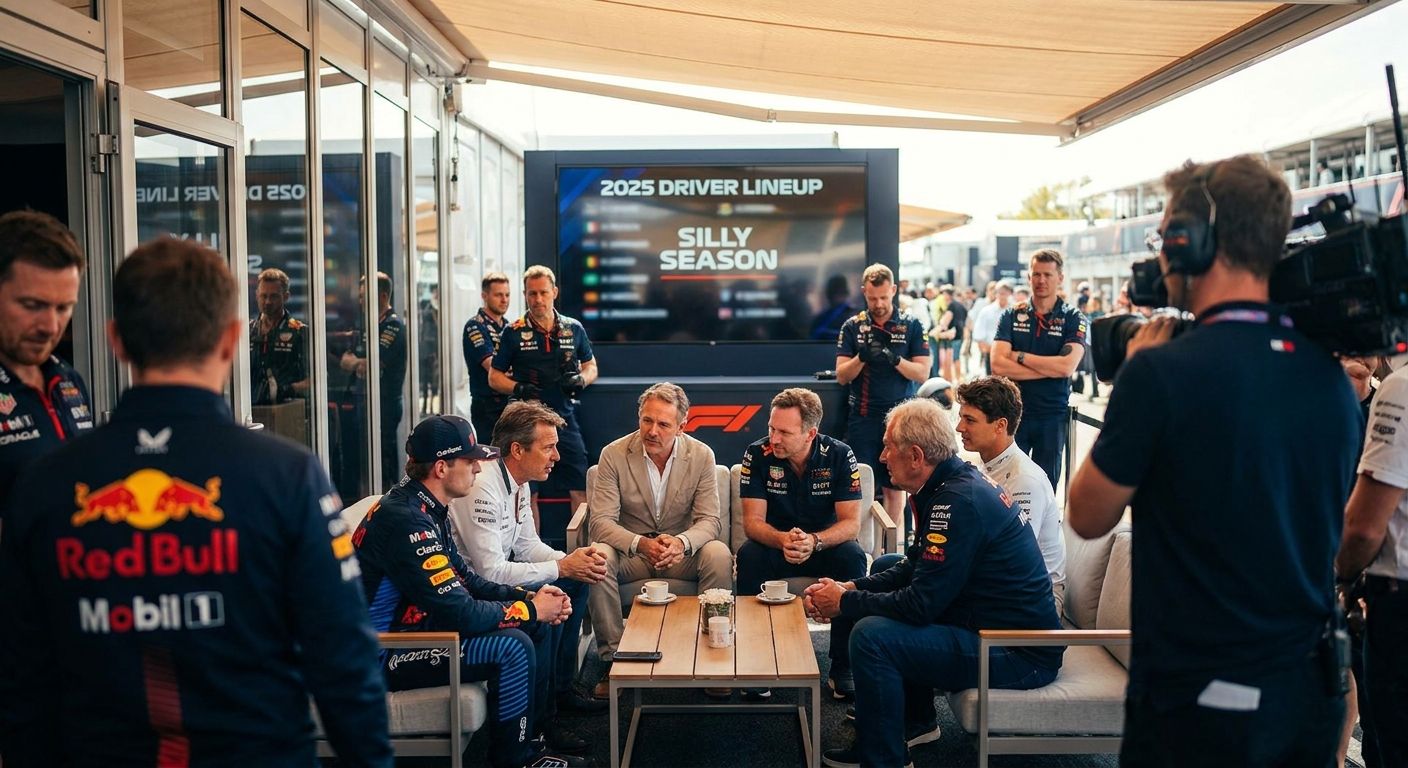
F1 silly season for bettors and fans is the annual scramble of contract expirations, seat swaps, and paddock leaks that determines who drives for whom before the next grid locks in — and in 2026 it's already reshaping betting markets months ahead of the actual driver announcements. Casual fans watch the rumors; bettors and fantasy players need to know which whispers move the needle and which are noise.
- The 2026 F1 driver market moves fastest between summer break and the Singapore weekend, when most contracts historically get signed.
- Only 20 seats exist across 10 teams, so one confirmed move triggers a domino effect across three or four other seats.
- Betting line shifts on next-season driver markets often lag official team confirmations by 48-72 hours — that gap is where value sits.
- Team performance trend lines predict driver market moves better than rumor sites do.
- SportsOrca's F1 championship contenders tracker is the fastest way to see which drivers are outperforming their current contracts.
Why silly season moves matter for bettors and fans
Every driver market shift changes three things at once: constructor odds, individual driver futures, and next-season fantasy value. A team that loses a proven points-scorer to a rival doesn't just lose a driver — it resets its constructor championship odds for the following year, sometimes before a single lap of the new season is driven.
Fans tracking silly season casually miss this. Bettors who track it well use the gap between rumor and confirmation to get ahead of line moves. SportsOrca's F1 championship contenders coverage tracks which drivers are performing above their contract status right now — that's the leading indicator for who moves next.
The 2026 driver market is no different from any other year in structure: 20 seats, 10 teams, and a handful of drivers whose current form doesn't match their current seat. The teams that move first in silly season are almost always reacting to a performance gap that showed up in the standings weeks earlier.
Track contract expiration windows first
Most multi-year F1 contracts run two or three seasons, and teams rarely let a deal expire without either extending or replacing a driver months in advance. Knowing who's out of contract heading into 2026 tells you where the market pressure sits before a single quote leaks.
- Pull each driver's known contract length from team announcements, not fan wikis
- Flag any driver entering the final year of a multi-year deal
- Note team principal comments that avoid confirming a driver's future — that's a tell
- Cross-check junior driver program graduates who are eligible to step up
- Watch reserve driver announcements, which often signal a seat is in play
Read team performance trends, not single-race results
A driver who's outqualifying a more experienced teammate for five straight races is a market mover. A single strong weekend isn't. Silly season decisions get made on trend lines, not highlight reels.
- Compare qualifying gaps between teammates over a rolling five-race window
- Track points-per-race trend, not season-total standings position
- Note which drivers are extracting results from a car that's underperforming its pace rank
- Watch for team radio tension — public frustration from a driver often precedes a seat change
- Flag any driver whose results improved sharply after a mid-season upgrade, since teams weigh that differently than raw pace
Follow paddock reporters over fan forums
Insider F1 reporters with team access break real driver market news days or weeks before it's confirmed. Fan forums recycle the same three rumors with different headlines. Learn which sources actually have sourcing.
- Prioritize reporters who cite named team sources over anonymous "paddock insiders"
- Track which outlets got the last three confirmed moves right first
- Ignore rumor accounts that never retract wrong predictions
- Follow team principal press conference transcripts directly when available
- Cross-reference two independent reporters before treating a rumor as reliable
Monitor betting market shifts as a confirmation signal
Odds on next-season driver futures and constructor championships move when sportsbooks price in leaked information, sometimes before a team confirms anything publicly. A sudden shift in a constructor's next-season odds without an on-track reason is worth investigating.
- Watch for line movement on constructor futures with no corresponding race result to explain it
- Compare driver-specific prop markets across multiple books for divergence
- Note the lag between line movement and official announcement — it's rarely instant
- Track reverse-line movement, where public money goes one way but the line moves the other
This is where most silly season followers stop doing the manual work and start using a tracker built for it. Checking SportsOrca's F1 coverage against the raw standings takes minutes instead of scrolling three separate forums, and it keeps the contender list current as results change week to week.
Build a driver-by-driver shortlist
Once you've got contract data, performance trends, and reporter consensus, put it in one place. A shortlist beats a mental list of scattered rumors every time silly season heats up.
- List every driver in the final year of their current deal
- Note their trend direction: rising, flat, or declining
- Record which teams have been linked to them by at least two independent sources
- Mark which seats are genuinely open versus rumored open
- Update the list weekly through the second half of the season
Adjust season-long bets before the market catches up
Once a move looks 80% locked based on trend data and reporter consensus, next-season constructor and driver futures often haven't repriced yet. That gap closes fast once a team confirms, so timing matters more than conviction.
- Place next-season futures bets before official confirmation, not after
- Avoid chasing a line that's already moved on confirmed news — the value is gone
- Track how each book prices a rumored move differently before locking in
“If a rumored F1 seat change hasn't moved the betting line in 72 hours, the market doesn't believe it yet.”
Comparison: where fans and bettors get silly season information
| Source | Best For | Update Speed | Key Limitation |
|---|---|---|---|
| Official team statements | Confirmed moves only | Slow, but certain | Rarely first to break news |
| Paddock reporters with team access | Early, sourced leaks | Fast | Requires vetting reporter track record |
| Fan forums and social rumor accounts | Volume of speculation | Very fast | High noise-to-signal ratio |
| Betting market line movement | Confirming rumor credibility | Fast, but lagged | Doesn't explain the "why" behind a shift |
| Team performance trend tracking | Predicting who's at risk | Ongoing, self-driven | Takes manual work without a tracker |
Verdict: paddock reporters with named team sources, cross-checked against betting line movement, give the most reliable early read on F1 driver market moves for 2026 — fan forums are entertainment, not signal.
Track the 2026 title race contenders
See which drivers are outperforming their contracts before the market moves.
Common mistakes fans and bettors make during silly season
- Treating every rumor as equal weight. A single unsourced tweet gets the same attention as a reporter with three confirmed years of sourcing accuracy — it shouldn't.
- Betting on rumors instead of trend data. A driver "linked" to a seat isn't the same as a driver whose performance data supports the move.
- Ignoring the domino effect. One confirmed move at the top of the grid almost always opens or closes two or three other seats — bettors who only track the headline move miss the secondary value.
- Chasing a line after it's already repriced. By the time a move is officially confirmed, the betting value from anticipating it is usually gone.
- Forgetting the 20-seat ceiling. With only 10 teams and two seats each, silly season is a closed system — every rumor has to be checked against who's actually out of contract.
FAQ
What is F1 silly season?
F1 silly season is the period, usually from mid-season through the final races, when driver contract rumors, seat swaps, and team announcements dominate the news cycle ahead of the next season's grid. It runs alongside the current championship but shapes the following year's lineup.
When does the 2026 F1 driver market usually settle?
Most confirmed driver moves land between the summer break and the final quarter of the season, with a handful of late announcements happening after the season finale. Contracts tied to performance clauses can extend that timeline further.
How many seats are actually in play during silly season?
There are 20 seats across 10 teams on the F1 grid, and in most seasons only a handful genuinely change hands. One confirmed move often triggers two or three connected seat changes down the grid.
Do betting lines move before F1 driver moves are confirmed?
Yes, next-season constructor and driver futures often shift when books price in credible leaks, sometimes 48-72 hours before an official team announcement. That lag is where informed bettors find value.
Are paddock reporters more reliable than fan forums for silly season news?
Reporters with named team sources have a far better track record on confirmed moves than anonymous forum accounts, which tend to recycle the same unconfirmed rumors. Cross-checking two independent reporters is the safest read.
What's the biggest mistake bettors make during F1 silly season?
Treating unsourced rumors the same as trend-backed predictions is the most common error. A driver's actual qualifying and race-pace trend against their teammate predicts a seat change far better than a single leaked quote.
Does team performance predict driver market moves?
Performance trend lines over a five-race window are one of the strongest predictors of who moves — teams rarely replace a driver who is trending up, even during a weak season for the car.
One last thing
The driver market rarely moves because of one bad race — it moves because a trend line crossed a threshold weeks earlier that nobody outside the team noticed until the rumor broke. Track the trend, not the headline, and the 2026 silly season stops feeling random.