NASCAR's 2026 playoff field will have 16 spots, and a handful of them go every year to drivers nobody had on a preseason bracket. Ranking the field's realistic dark horses means looking past name recognition and at track type, stage-point history, and who wins the last 10 laps when the big teams get tight.
- Carson Hocevar is the top NASCAR dark horse for playoff contention in 2026 on raw mile-and-a-half speed.
- AJ Allmendinger banks automatic stage points on road courses that other underdogs can't touch.
- Michael McDowell's 2021 Daytona 500 win proves a superspeedway upset can carry a whole season.
- Ross Chastain's short-track aggression turns single races into playoff-point swings.
- A win still locks in an automatic playoff berth, which is the fastest path for any of these five.
Why this matters
The 16-driver playoff field doesn't care about budget. It cares about points and wins, and a single-car team that steals a plate-track win in July gets the same automatic berth as a four-car powerhouse that's led the points since March.
That's the entire case for underdog moneyline bets on NASCAR Sundays: the sport's playoff format is built to reward exactly the chaos these five drivers create. A dark horse doesn't need a full season of consistency. It needs one green-white-checkered restart to go its way, or a manufacturer alliance that quietly hands it a faster road-course package than its budget should allow.
Heading into 2026, the drivers below aren't longshots because they're slow. They're longshots because their teams don't have the year-round R&D budget of the sport's top four organizations, which means every strong finish looks like an upset even when the speed was real.
What makes the best NASCAR dark horse pick
- Track-type speed edge — fast at short tracks, road courses, or superspeedways without needing a mile-and-a-half budget
- Stage-point history — banks points early in a race instead of relying on a late-race miracle
- Aggressive closing laps — a driving style that turns the final 10 laps into a coin flip
- Manufacturer alliance depth — access to a Ford, Chevrolet, or Toyota technical partner that punches above the team's own budget
- Pit road consistency — a smaller crew that still executes clean stops under pressure
- Recent flashes relative to funding — speed that outruns the team's own resources, not just a name fans recognize
At a glance: 2026 NASCAR dark horses ranked
| Driver | Team | Best for | Standout trait | Key limitation |
|---|---|---|---|---|
| Carson Hocevar | Spire Motorsports | Overall dark horse | Mile-and-a-half raw speed | Contact-heavy style invites penalties |
| AJ Allmendinger | Kaulig Racing | Road-course stage points | Two decades of road-course craft | Oval speed lags the road-course form |
| Ross Chastain | Trackhouse Racing | Short-track aggression | Turns the final laps into chaos | Aggression cuts both ways on restarts |
| Michael McDowell | Spire Motorsports | Superspeedway upset | Already has a Daytona 500 win on record | Plate-track speed doesn't transfer to intermediate tracks |
| Todd Gilliland | Front Row Motorsports | Low-budget breakout | Nothing-to-lose closing laps | Week-to-week results swing wildly |
1. Carson Hocevar: best NASCAR dark horse for overall playoff contention
Carson Hocevar is the best overall NASCAR dark horse for 2026 playoff contention, running a single-car Spire Motorsports program that keeps flashing mile-and-a-half speed against four-car powerhouses. He races loose, restarts aggressively, and treats every mid-pack finish as a step toward stealing playoff points from bigger names.
Carson Hocevar pros:
- Genuine speed at 1.5-mile tracks, the format that decides most of the regular season
- Aggressive late-race restarts that create upset chances other underdogs don't get
- Growing week-to-week comfort with Spire's setup notes
Carson Hocevar cons:
- Contact-heavy racing style draws penalties and enemies in the field
- Spire's alliance depth can't match the sport's top organizations on off-weeks
- Strategy calls lean less measured than bigger, better-staffed shops
Best for: the reader who wants one name to watch across the whole 2026 season. Verdict: Buy.
2. AJ Allmendinger: best NASCAR dark horse for road-course stage points
AJ Allmendinger turns road-course weekends into automatic playoff points, and Kaulig Racing built its whole Cup program around that skill. Watkins Glen, Sonoma, and the street-course dates aren't upset opportunities for him — they're scheduled points hauls.
AJ Allmendinger pros:
- Elite road-course craft built over two decades in the car
- Stage points on road-course weekends stack playoff points other underdogs can't bank
- Veteran composure that avoids the contact that ends other dark-horse runs
AJ Allmendinger cons:
- Oval speed consistently trails his road-course form
- A rough oval stretch can erase a strong road-course points cushion fast
- Kaulig still chases the pit-road execution of the series' top four organizations
Best for: bettors and fans tracking a driver who scores predictably on a handful of dates. Verdict: Buy.
3. Ross Chastain: best NASCAR dark horse for short-track aggression
Ross Chastain doesn't wait for the field to make a mistake — he creates the moment himself, and Trackhouse Racing has built a program willing to let him race that way. His short-track and closing-lap aggression is the reason he's stayed in playoff conversations for multiple seasons running.
Ross Chastain pros:
- Turns the final 10 laps of short-track races into genuine chaos
- Trackhouse's growth as an organization has closed the gap with the sport's biggest teams
- Comfortable racing from outside the safe transfer spots without backing off
Ross Chastain cons:
- The same aggression that creates upsets also creates costly wrecks
- Reputation among other drivers means less room given on restarts
- Short-track speed doesn't always carry to intermediate ovals
Best for: the reader who wants a driver who manufactures his own highlight reel. Verdict: Buy.
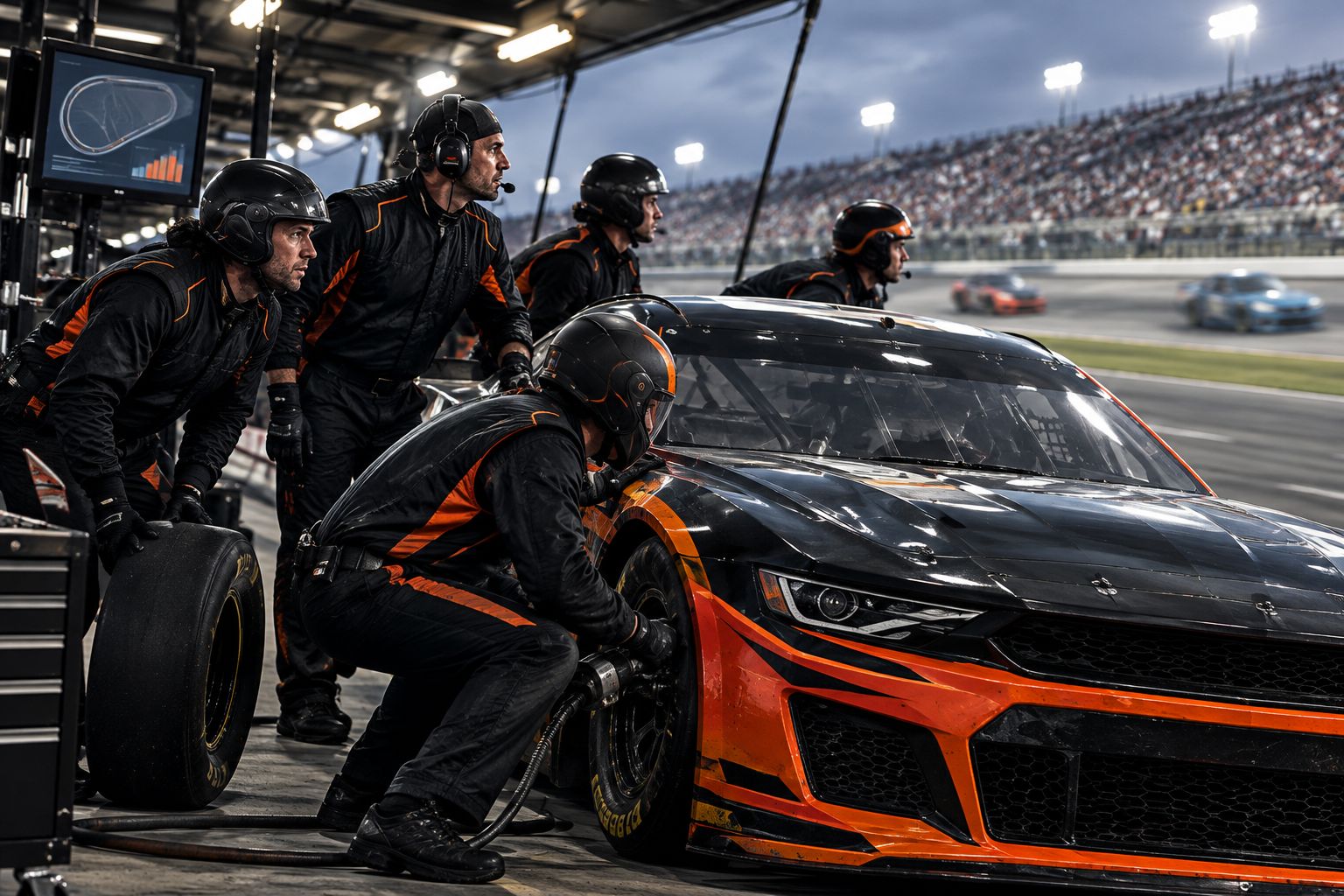
4. Michael McDowell: best NASCAR dark horse for a superspeedway upset
Michael McDowell already proved the theory works: he won the 2021 Daytona 500 from a single-car underdog seat, and that pedigree travels with him to Spire Motorsports. Plate-track racing is a leveler, and few active drivers exploit that leveling better than McDowell.
Michael McDowell pros:
- Already has a Daytona 500 win, proof the superspeedway ceiling is real for him
- Superspeedway racing rewards patience and timing over raw horsepower budget
- Experienced hand who avoids the big wrecks more often than not
Michael McDowell cons:
- Plate-track speed doesn't transfer to intermediate or mile-and-a-half tracks
- A single win-and-in path means one bad Daytona or Talladega weekend sets the season back
- Spire's broader program still lags the top organizations outside superspeedways
Best for: anyone circling the Daytona and Talladega dates as the real playoff-berth opportunities. Verdict: Buy.
5. Todd Gilliland: best NASCAR dark horse for a low-budget breakout
Todd Gilliland races for Front Row Motorsports, a team that has spent years squeezing playoff-caliber runs out of a Ford technical alliance smaller teams would kill for. He drives with nothing to lose, which is exactly the mindset that produces late-race chaos in his favor.
Todd Gilliland pros:
- Nothing-to-lose closing-lap style creates chances bigger names won't take
- Front Row's Ford alliance access punches above the team's own budget
- Low external pressure lets him race loose without second-guessing
Todd Gilliland cons:
- Results swing wildly week to week with no consistent floor
- A smaller full-time roster means fewer resources after contact damage
- Mile-and-a-half speed still trails the series' established points leaders
Best for: the reader who wants the true longshot on the list, not just an underfunded name. Verdict: Hold.
How this list was ranked
Every driver above cleared the same bar: real speed at a specific track type, a stage-point or win history that doesn't depend on someone else's bad day, and a manufacturer alliance that closes at least part of the resource gap with NASCAR's top four organizations. Drivers who only flash speed once a season, without a repeatable track-type edge, got left off.
Track every 2026 playoff scenario
Follow the full field as the elimination rounds cut the 16 down to four.
Which NASCAR dark horse should you back for 2026?
Carson Hocevar is the default pick for anyone who wants one name to follow across the full 2026 season — his mile-and-a-half speed shows up on the tracks that decide the regular-season standings, not just a handful of specialty dates. If the interest is narrower, AJ Allmendinger is the safer bet on road-course weekends specifically, and Michael McDowell is the play the moment the schedule hits Daytona or Talladega. Ross Chastain and Todd Gilliland round out the list as the higher-variance names — bigger upside, less predictable floor.
FAQ
What is a NASCAR dark horse in the playoff format?
A NASCAR dark horse is a driver outside the sport's top-funded organizations who has a realistic path to the 16-driver playoff field through wins, stage points, or a specific track-type strength. They're not favorites, but their speed is real on the right weekend.
How many drivers make the NASCAR Cup Series playoffs?
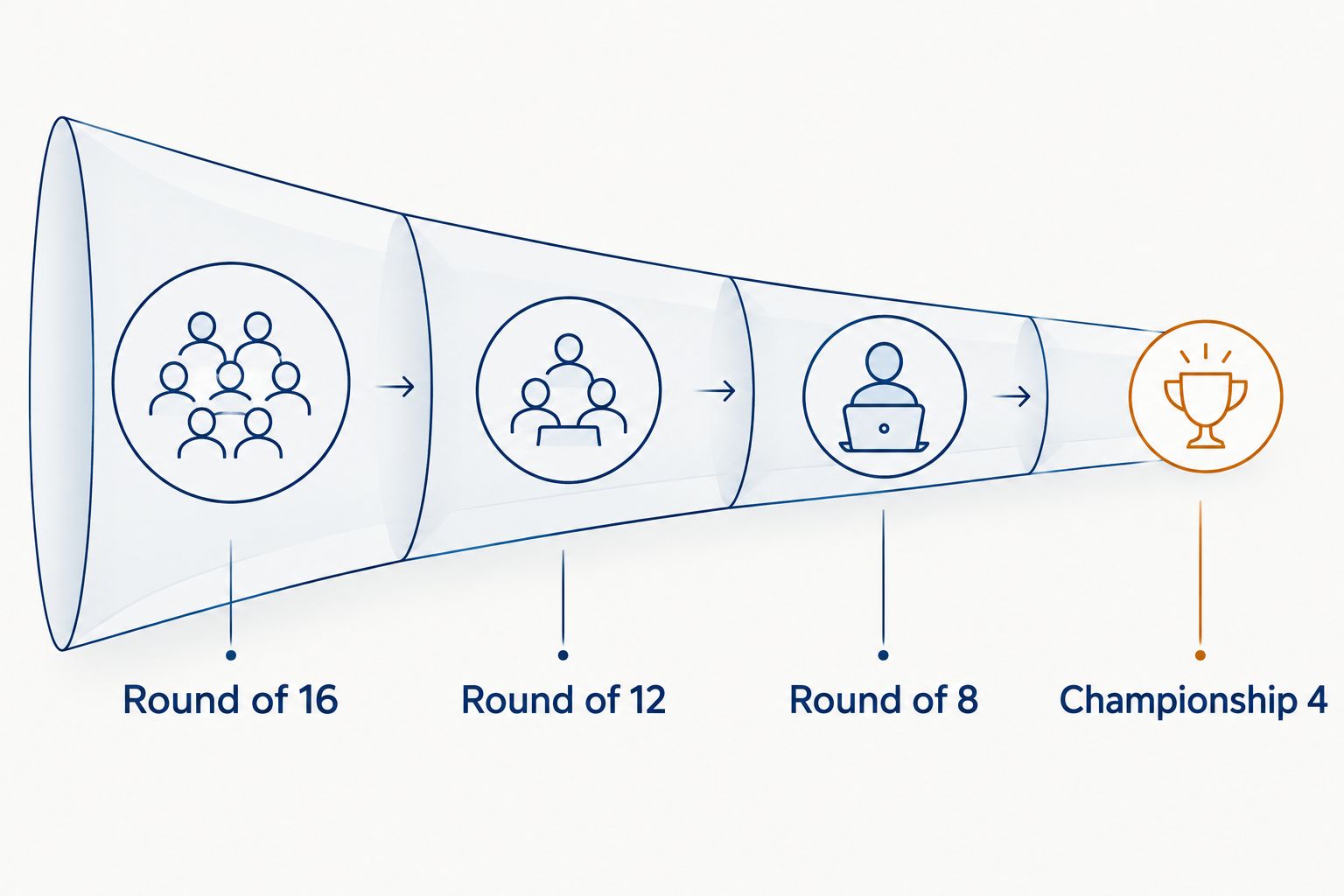
Sixteen drivers make the NASCAR Cup Series playoff field. The field cuts to 12 after the first round, 8 after the second, and 4 for the championship race.
Can a low-budget NASCAR team really make the Championship 4?
Yes, if the driver wins a race during the regular season or a playoff round, since a win locks in an automatic advance regardless of team budget. It's rare, but the format is built to allow exactly that.
Is Carson Hocevar a real playoff threat in 2026?
Carson Hocevar has shown genuine speed at mile-and-a-half tracks out of Spire Motorsports' single-car program, which makes him the top dark-horse pick for 2026 playoff contention. His contact-heavy style is the main risk to that path.
Why does a single win matter so much for dark horse drivers?
A win during the regular season is an automatic playoff berth, which lets an underfunded team skip the points battle entirely. For a dark horse, one strong Sunday can do more than a full season of top-15 finishes.
Which tracks favor NASCAR dark horses the most?
Superspeedways like Daytona and Talladega, and road courses like Watkins Glen and Sonoma, level the field the most because they reward timing, patience, and specific skill over raw manufacturer R&D budget.
How do stage points help underdog playoff pushes?
Stage points are awarded for the top finishers at the end of each race stage, giving a fast-but-underfunded driver a way to bank points before the closing laps even start. Drivers like AJ Allmendinger lean on this every road-course weekend.
Is AJ Allmendinger better on road courses than ovals?
Yes, AJ Allmendinger's road-course results consistently outperform his oval finishes, which is why Kaulig Racing built its Cup program around maximizing those specific weekends.
One last thing
Michael McDowell's 2021 Daytona 500 win is the single best proof that this whole list matters: a single-car underdog team beat the entire field on NASCAR's biggest stage, and nothing about the 2026 playoff format makes that harder to repeat. If anything, a 16-driver field with an automatic win-and-in path makes it easier.