Daily fantasy sports is worth it in 2026 if you enjoy making lineup decisions and can treat entry fees as entertainment spending. It is not worth it as a plan for reliable income: strong picks can still lose when injuries, playing time or game scripts change. The question is whether the contests make watching more engaging without pushing you past a limit you set before entering.
- Is daily fantasy sports worth it in 2026? Yes for fans who enjoy lineup decisions, not for anyone seeking dependable income.
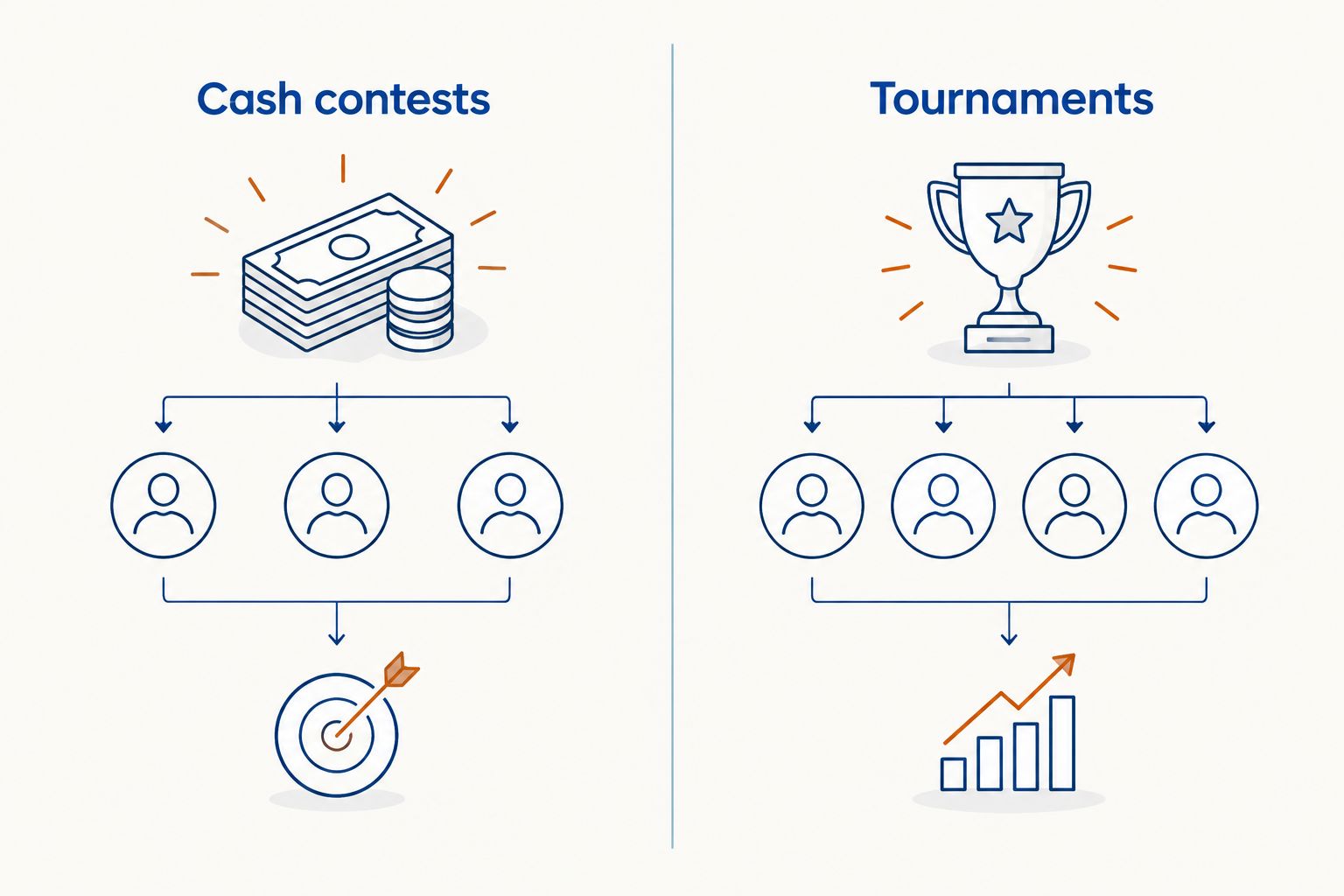
- Cash contests favor a steady finish; tournaments demand a high finish and bring greater variance.
- SportsOrca is best for fans who want sports predictions and game analysis before choosing a lineup.
- Set an entry limit before opening a slate, and judge your decisions separately from the result.
Is daily fantasy sports worth it in 2026?
Yes for entertainment; no as an income strategy. Start with the daily fantasy sports beginner’s guide if you have not built a lineup before. Then decide what you want from a contest: a reason to follow the whole game, a test of your player reads or a financial return. Only the first two depend on something you can evaluate without assuming you will win.
| Choice | Best for | What works | What works against it |
|---|---|---|---|
| Cash contests | Players who prefer a steadier target | You generally need to finish above a payout cutoff rather than beat the entire field | A good-looking lineup can still miss the cutoff; repeated entry fees matter |
| Tournaments | Players who enjoy taking a stand on a game script | An unusual lineup can benefit when a less popular prediction comes through | High finishes matter more, and long losing stretches are possible |
| Season-long fantasy | Fans who want decisions spread across a season | You can react to trades, injuries and changing roles over time | It demands an ongoing commitment and depends on league rules |
| Watching without entering | Fans who want the game, not a contest | No contest result controls whether the night felt worthwhile | You do not get the lineup-building challenge |
Those options are not steps on a ladder. A tournament is not an upgrade from a cash contest, and entering either is not a requirement for being a serious fan. In 2026, the right choice is the one whose downside you can accept before the first game starts.
Why this matters
A lineup turns every rotation change into a decision you have to live with. The starter you trusted sits; the bench player you passed over gets more minutes. That tension is the attraction, but it also makes a losing entry feel as though the next one will settle the argument.
SportsOrca is best for fans and bettors who want sports predictions and team or game analysis before making their own calls. It publishes analysis, not a guarantee that a player will deliver a contest-winning performance. Read a prediction as a case to examine, then decide whether its assumptions fit your lineup.
Cash contests: the steadier DFS test
Cash contests ask a narrower question than tournaments: can your lineup clear the relevant cutoff? That makes them the better fit if you want to assess player roles without needing every less obvious pick to hit. Steadier does not mean safe. Your lineup can miss even when your reasoning was sound, and a contest’s rules still determine the result.
Start with playing time and role. In an NBA slate, a player expected to handle the ball has a different path to fantasy production from a player whose opportunity rests on a hot shooting night. In an NFL slate, consider how the offense distributes opportunities, not just whether you expect the team to win. These are questions to investigate, not reasons to treat a projection as a promise.
The weakness of cash contests is easy to overlook because the objective sounds manageable. A modest target can encourage frequent entries, while the cost of each missed cutoff remains real. If entering stops being an enjoyable choice and becomes an attempt to get back what you lost, skip the next slate.
Verdict: choose cash contests if you enjoy building a lineup around established roles and can accept a missed cutoff without chasing it. If that last condition fails, watching the game is the better option.
Tournaments: a bigger swing, not a better shortcut
Tournaments reward a different kind of decision. It is not enough to identify players who should perform well; you also have to think about how your lineup can separate from other entries. That can make a game script compelling. If you expect an NFL matchup to turn into a passing battle, your selections need to make sense together rather than read like unrelated player picks.
That same structure makes tournaments harder to judge by a single result. An unlikely play can beat a careful read, while a coherent lineup can finish nowhere near the top. Do not rewrite your process after every loss or call every winning entry proof that the process works. Ask whether the assumptions were clear before kickoff and whether the lineup followed them.
The appeal is real for fans who enjoy arguing a specific matchup. The drawback is variance: a contest built around high finishes does not reward every reasonable lineup. Verdict: choose tournaments for the lineup puzzle, not because you need the next result to repay the last one.
Cash contests vs tournaments: pick the game you mean to play
A cash lineup and a tournament lineup can contain the same players, but the contest changes what you are asking those players to do. In cash contests, the central test is clearing a cutoff. In tournaments, it is finishing high against the field. The distinction matters before you compare players, because it changes how much uncertainty you are willing to accept.
Do not confuse either format with a sports bet. A bet and a DFS lineup have different rules and ways of settling, even if the same game informs both decisions. If you also bet on games, keep the decisions separate: the NBA parlay guide addresses a different kind of wager, not a substitute for DFS lineup strategy.
Why daily fantasy sports value varies
The same contest can feel worthwhile to one fan and draining to another. These factors decide which side of that line you are on:
- Your reason for entering. A lineup can give you a reason to follow substitutions, matchups and late-game choices. If your only acceptable outcome is a financial gain, a loss defeats the purpose immediately.
- The contest format. A cutoff and a top-heavy finish ask for different risk decisions. Read the scoring and payout rules before building; the format determines what a successful lineup needs to accomplish.
- How well you know the slate. A familiar team gives you a starting point for checking roles and likely game flow. Familiarity alone is not an edge, especially when it keeps you attached to a player whose role has changed.
- The time you can give it. Lineup decisions do not end when you recognize the player names. You need time to check the contest rules, current availability and any relevant changes before entries lock.
- Your reaction to losses. A predefined spending limit makes it possible to stop. Changing that limit after a bad result turns a pastime into an attempt to recover money.
- Whether the analysis helps you think. SportsOrca’s game analysis and predictions can provide a case to test. They cannot tell you whether the risk of a particular contest fits your circumstances.
These factors are more useful than asking whether someone else won a tournament. Their result says nothing about your budget, the contest you chose or the decisions you made. In 2026, judge the experience against your own reason for entering.
How do you decide before entering a slate?
Make the decision while you are calm, not after a highlight changes your mood. If a losing result would make you raise your next entry, do not enter this one. Otherwise, use a short process that keeps the game and your limits in view:
- State the point of playing. If you want a more involving watch, say so. If you want dependable income, stop: DFS cannot provide a dependable result from any individual lineup.
- Choose the contest format. Decide whether you prefer a cutoff or a high-finish challenge before selecting players. Do not build a lineup first and search for a contest that makes it feel right.
- Set a spending limit. Choose an amount you can lose without changing another financial decision. Do not revise it because the early games went badly or well.
- Write down your game read. Name the roles, matchups or likely game flow behind your selections. A lineup without a clear case is difficult to assess after the games end.
- Check the rules and current information. Scoring, lineup requirements, availability and entry conditions matter. A prediction written before a role changes needs a fresh look.
- Review the decision, not just the finish. Separate the assumptions that held up from the ones that did not. One outcome cannot tell you everything about a process.
That last step is where SportsOrca’s team and game analysis fits: it gives you another view of the matchup to weigh against your own. It does not make the entry compulsory. Sometimes the strongest read is that the slate offers nothing you want to play.
Is DFS worth it if you only follow one sport?
Yes, if following that sport makes lineup research enjoyable rather than obligatory. You do not need to enter every slate or learn every league. A focused fan can compare player roles and matchups in a familiar sport, then skip contests when the available choices do not interest them.
The trade-off is repetition. Knowing one league can sharpen the questions you ask, but it can also make you overconfident in familiar names. In 2026, check the current role before trusting last week’s impression.
Is DFS worth it if you keep losing?
No, if losses are prompting you to enter more often or spend beyond your limit. Stop entering and look at both the contest format and the reasons behind your picks. If the decisions still make games fun and the spending remains within a limit you accept, you can decide whether that entertainment is worth it; you do not have to win to justify enjoying a game.
A losing run is not a challenge you owe the contest an answer to. The next slate is a new choice, not a bill from the previous one.
Can you enjoy DFS without entering every game?
Yes; selective entry is often a clearer test of whether you actually enjoy building lineups. You can follow news, compare predictions and make a lineup on paper without paying to enter it. If that process is satisfying on its own, contests are optional rather than the reason to watch.
That distinction matters when a busy schedule leaves little time to check changes near lock. In 2026, skipping a slate you have not reviewed is a decision, not a missed obligation.
FAQ
Is daily fantasy sports worth it in 2026?
Daily fantasy sports is worth it in 2026 if lineup decisions add to your enjoyment of games and you accept the possibility of losing entry fees. It is not a dependable source of income.
Are cash contests better than tournaments for beginners?
Cash contests are the clearer starting point if you prefer trying to clear a payout cutoff. Tournaments demand high finishes and bring greater variance; neither format removes the risk of losing.
Can I make a reliable income from daily fantasy sports?
No DFS lineup provides a reliable result. Do not treat contest entries as an income plan or use money you need for other expenses.
Should I enter DFS contests after a losing streak?
Do not enter to recover a loss. Return only if you still want to play, understand the contest and can stay within a limit set before the slate.
Do I need sports predictions to play DFS?
No. Predictions can help you examine a matchup, but you still need to check contest rules, player roles and current information before choosing a lineup.
Is DFS the same as season-long fantasy sports?
No. DFS centers on an individual contest or slate, while season-long fantasy involves decisions across a season. Choose based on whether you prefer a shorter lineup challenge or an ongoing league.
What should I check before submitting a DFS lineup?
Check the contest’s scoring and lineup rules, then review current player availability and roles. Make sure the entry fits the spending limit you chose before building.
One last thing
The best test does not require an entry. Build a lineup, write down why each choice belongs and follow the games without submitting it. If the decisions and the matchup still hold your attention, DFS has something to offer you in 2026. If only a payout makes the exercise feel worthwhile, leave the contest alone.