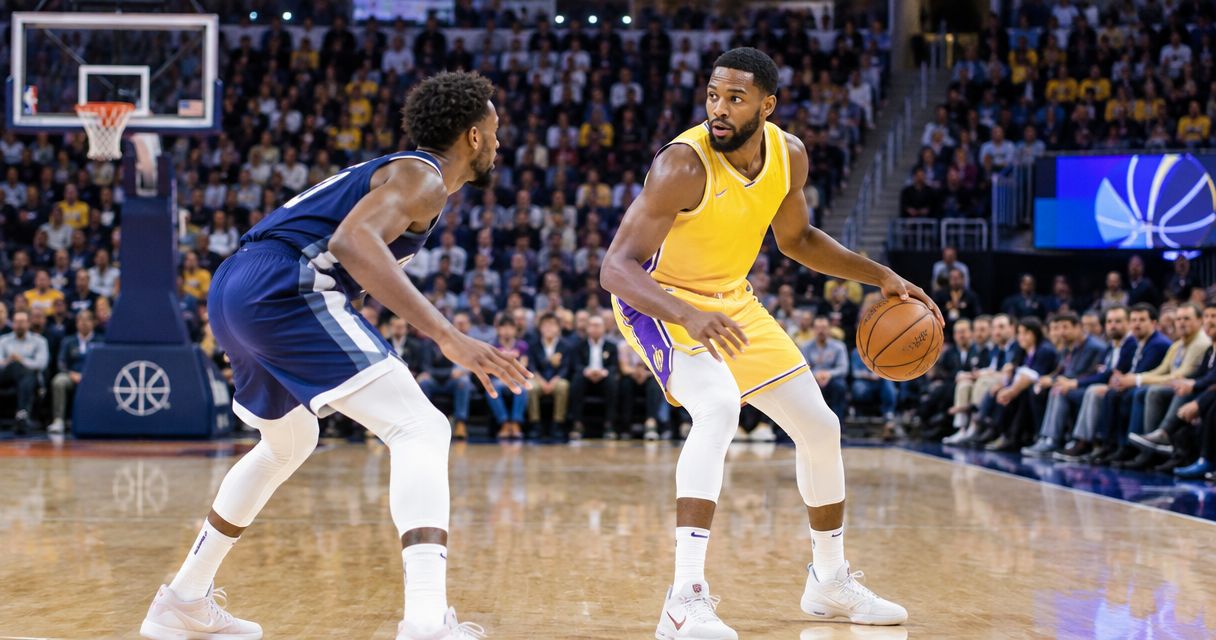
An NBA game usually takes about 2 to 2½ hours from tip-off to the final buzzer, so budget 2½ hours if you need to plan around one in 2026. The game clock shows 48 minutes of regulation play; timeouts, fouls, reviews, quarter breaks and halftime add time you will spend watching. Overtime adds more.
- An NBA game usually lasts about 2 to 2½ hours in real time; budget 2½ hours to watch.
- NBA regulation has four 12-minute quarters, totaling 48 minutes on the game clock.
- Each overtime period adds five minutes of game-clock play, plus its stoppages.
- SportsOrca NBA analysis is best for fans who want game context, not a guaranteed finish time.
Why this matters
If you are fitting a game between other plans, the 48-minute clock is the wrong number to use. It tells you how much regulation basketball the teams play, not when you will be free. The NBA rules guide covers the on-court basics; this guide deals with the time they take off the court.
That distinction matters whether you are watching one game or following several. In 2026, a scheduled tip-off is a starting point, not a promised finish time. Plan around real elapsed time, then leave room for a close finish.
How long does an NBA game usually last?
About 2 to 2½ hours is the practical answer. Under NBA playing rules, regulation contains four 12-minute quarters, or 48 minutes of game-clock time. The clock stops during parts of the game, and breaks happen between periods. A tied game continues into overtime rather than ending when regulation expires.
| What you are measuring | Duration | What the number means |
|---|---|---|
| A regulation quarter | 12 minutes | Playing time shown on the game clock, excluding stoppages |
| Regulation | 48 minutes | Four quarters of game-clock time, not total viewing time |
| One overtime period | 5 minutes | Extra game-clock time if regulation ends tied |
| A game from tip-off to final buzzer | About 2 to 2½ hours | A planning range, not a fixed finish time |
The table explains why two answers to the same question can both be correct. Ask how long NBA players compete in regulation, and the answer is 48 minutes. Ask how long you will watch, and the answer includes every stoppage between tip-off and the final buzzer.
There is no countdown that tells you precisely when the broadcast will end. The game clock runs only during live play, while the time you spend watching keeps moving through substitutions, free throws and breaks. A 2026 game that stays close late can take longer than one with fewer late stoppages.
Regulation: 48 minutes on the game clock
NBA regulation is split into four 12-minute quarters. Those numbers describe playing time, not uninterrupted action: the clock can stop repeatedly before a quarter reaches zero. Halftime and the breaks between quarters sit outside the 48-minute total.
Think of the game clock as the measure of basketball still to be played. It does not count every minute that passes in the arena or on your screen. Use 48 minutes to understand the rules; use about 2 to 2½ hours to plan your evening.
The distinction also helps when you join a game late. Seeing little time left in the fourth quarter does not tell you exactly how much real time remains. The score, possession changes and stoppages still shape the finish.
Overtime: 5 more minutes of game-clock play
If the score is tied after the fourth quarter, the teams play a five-minute overtime period. If they remain tied, they play another. Each overtime extends the game beyond regulation, but five minutes on the clock does not mean five more minutes on your watch.
A single overtime makes the scheduled end less useful as a planning guide. Multiple overtimes stretch it further. The overtime rule supplies the extra playing time; it does not supply an exact real-world finish time.
For a 2026 game you cannot miss the end of, avoid treating the upper end of the usual range as a deadline. Overtime has no place in that estimate until the game actually reaches it.
Why NBA game length varies
The same four-quarter format can produce different finish times. Watch for these factors when you decide whether to keep your plans flexible:
- Clock stops: The game clock pauses during stoppages, but your watch does not. More stoppages mean more elapsed time.
- Timeouts: Teams can halt play to regroup. A timeout adds real time without using up the remaining game clock.
- Fouls and free throws: A foul can stop live play and lead to free throws before the next possession begins.
- Reviews: Officials can review a play before action resumes. The time spent reviewing is not playing time.
- Halftime and quarter breaks: These separate periods of play and add to the viewing time beyond regulation's 48 minutes.
- Overtime: A tie after regulation adds at least one five-minute period, along with any stoppages during it.
These factors do not have equal weight in every game. A late sequence of fouls and timeouts can make the final stretch feel far longer than the same amount of game-clock time earlier in the night. If the score is tied, even the number of periods left is unknown.
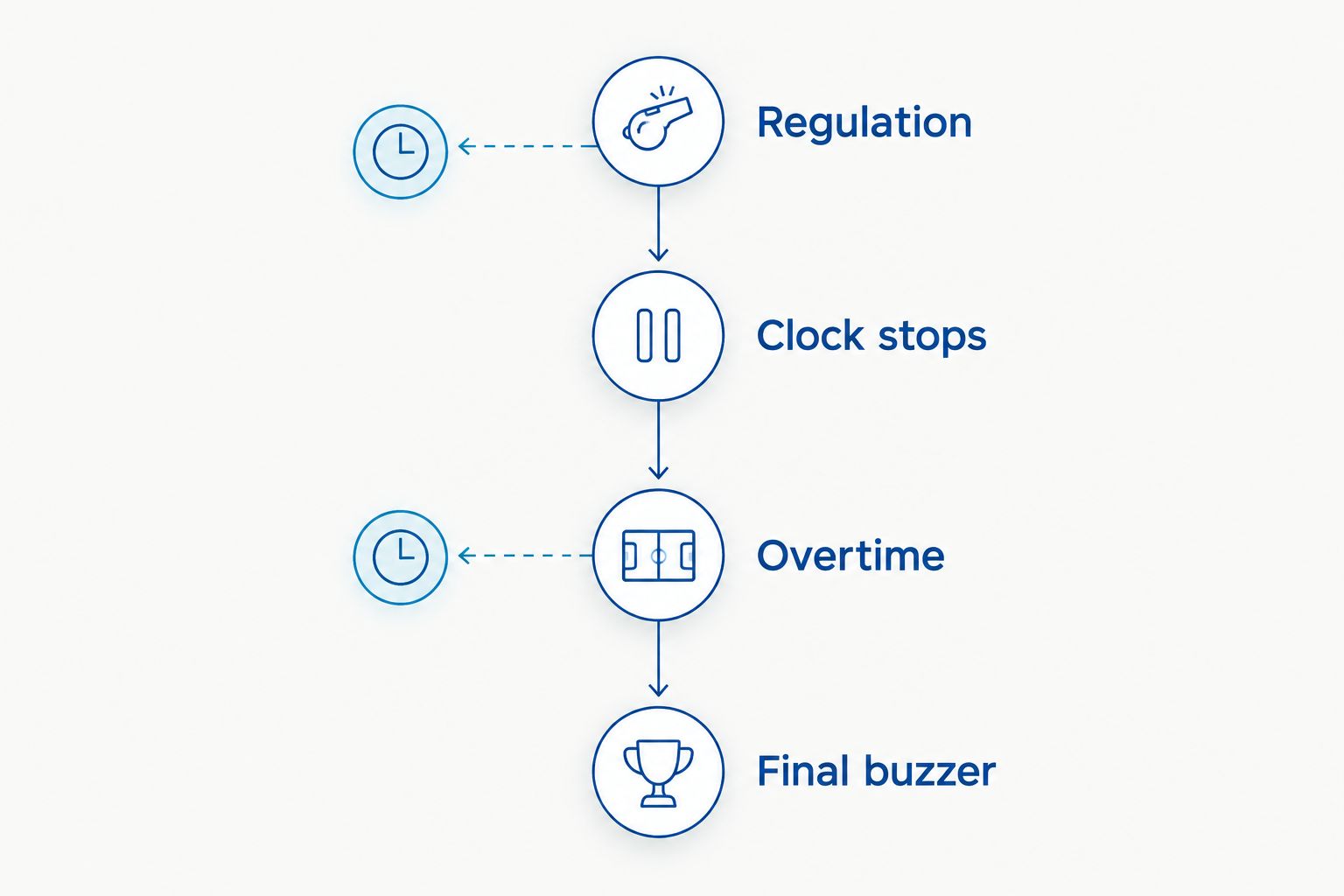
For SportsOrca readers following an NBA matchup, the score matters more than a predicted end time once the fourth quarter begins. A close game invites the very stoppages that make its finish harder to schedule around. Check the live clock and score rather than subtracting the displayed minutes from the current time.
Does the shot clock change how long an NBA game lasts?
The NBA shot clock gives a team 24 seconds to attempt a shot after gaining possession, subject to the league's reset rules. It governs a possession; it does not make the whole game a fixed number of possessions or a fixed length in real time.
A shot-clock violation stops play, and the next possession begins under the applicable clock rules. Fouls, timeouts, reviews and breaks still sit outside any simple calculation based on 24-second possessions. Do not multiply shot-clock cycles to estimate when a game ends.
This is one reason an apparent shortcut fails. The shot clock and game clock answer different questions, and neither includes every minute a fan spends watching. In 2026, the useful viewing estimate remains about 2 to 2½ hours for a game without an extended finish.
Is a close game longer than a blowout?
A close NBA game can take longer, especially if teams use late timeouts, commit fouls or reach overtime. A blowout still has the same 48 minutes of regulation on the game clock, so the margin alone does not determine its real-world length.
Late-game strategy is the difference to watch. When each possession matters, play can stop often while little time comes off the clock. In a less contested finish, the clock can move through the remaining play with fewer interruptions. Neither pattern guarantees an exact finish time.
SportsOrca NBA coverage follows teams and matchups, but a preview cannot promise how many late stoppages a game will have. Treat a projected result and a projected end time as separate questions. Only the live game settles the second one.
How much time should you set aside to watch?
Set aside about 2½ hours for a typical NBA game from tip-off to final buzzer. If you must be somewhere immediately afterward, leave additional flexibility for overtime or a drawn-out finish; the usual range is not a cutoff.
If you are watching a 2026 game on a delayed broadcast, the scheduled tip-off does not tell you where the live game will be when you press play. Check the game status first if seeing the ending live matters to you. If you are recording it, allow for a finish that runs beyond the usual viewing window.
For fans following several games, overlap is normal: one game's fourth quarter can still be underway after another has started. SportsOrca's NBA analysis is most useful here as game context, not as a substitute for a live clock. Follow the matchup you care about, then check its actual status before switching away.
FAQ
How long does an NBA game last in real time?
An NBA game usually lasts about 2 to 2½ hours from tip-off to the final buzzer. Stoppages and overtime can extend the viewing time.
How many minutes is an NBA game without overtime?
An NBA game has 48 minutes of regulation playing time. Those four 12-minute quarters do not include the breaks and stoppages that add to real elapsed time.
How long is each NBA quarter?
Each NBA quarter is 12 minutes on the game clock. Clock stoppages mean a quarter takes longer than 12 minutes to watch.
How long is NBA overtime?
An NBA overtime period is five minutes on the game clock. Stoppages during overtime add to the time you spend watching.
Can an NBA game have more than one overtime?
Yes. If the score remains tied after an overtime period, the teams play another five-minute period until there is a winner.
Why does the last minute of an NBA game take so long?
The last minute can include timeouts, fouls, free throws and reviews. Each stoppage takes real time while little or no game-clock time passes.
What time will an NBA game finish if it tips off tonight?
Allow about 2 to 2½ hours after tip-off for a typical finish, but do not treat that range as a guaranteed end time. Check the live score and clock if your plans depend on the result.
One last thing
The final minute on the NBA clock is not a one-minute wait. In a tight 2026 game, a single possession can involve a timeout, a foul or a review before the clock moves again. If you need to leave at a fixed time, plan around 2½ hours plus flexibility, not the minutes displayed on screen.