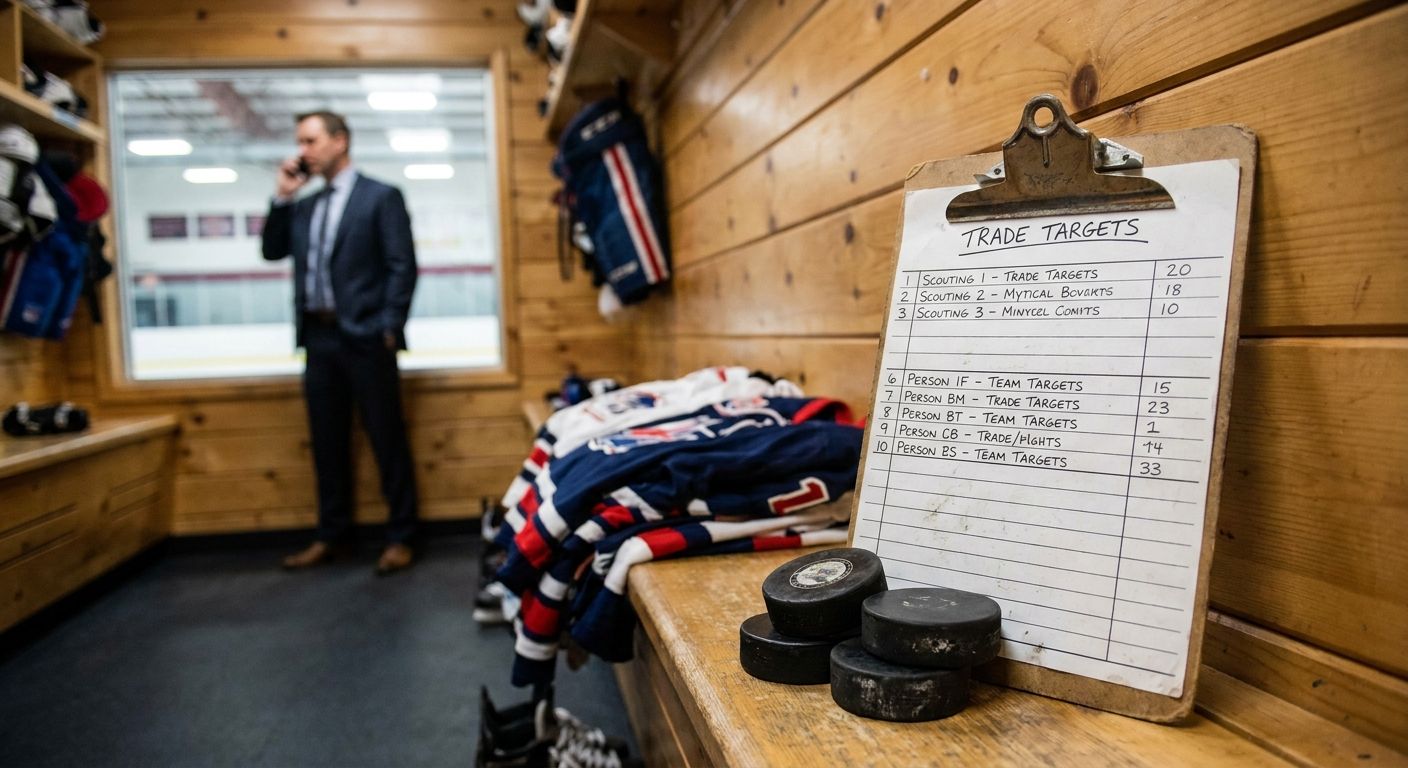
NHL trade candidates for teams needing scoring depth are forwards and puck-moving defensemen on rosters that have fallen out of playoff contention, whose term, cap hit, and role fit a buyer's remaining cap space and lineup holes. A scoring-depth need is different from a top-line need — the buyer isn't chasing a 40-goal name, it's chasing two or three players who turn a punchless third line into a matchup problem. That distinction changes who you should actually be calling before the trade deadline.
- NHL trade candidates for scoring depth are middle-six wingers and secondary centers, not top-line rentals — cap fit matters more than name value.
- Retained-salary trades cap any single team at three simultaneous retained contracts league-wide, a hard limit that shapes what sellers can even offer.
- Rental scorers on expiring deals cost more in draft capital per game played than a two-year term player with a similar point pace.
- The trade deadline lands in early March most seasons, and depth-scoring prices spike hardest in the final 10 days before it.
- Buy-low reclamation forwards from bottom-five teams are the cheapest scoring-depth path if you can live with inconsistent minutes.
Why NHL trade candidates for scoring depth matter right now
A team stuck in the middle of the standings in 2026 doesn't lose in the first round because its top line disappeared — it loses because its bottom six went scoreless for six straight games. Scoring depth is what turns a four-line team into a team that can survive an injury to its number-one center without the whole offense collapsing. General managers chasing this kind of upgrade aren't shopping for a superstar; they're shopping for a specific role, at a specific cap number, with a specific term.
That's also why depth-scoring trades move differently than blockbuster deals. Sellers rebuilding around draft picks are far more willing to move a 35-point winger for a second-round pick than they are to move a 25-year-old top-line center for anything short of a haul. SportsOrca's NHL coverage tracks these mid-tier moves all season because they decide more playoff races than the headline trades do.
Diagnose your actual scoring gap
Before you call another GM, know exactly what's broken. A team averaging under two goals a game from its bottom two lines has a different problem than a team that can't finish on the power play.
- Break down goals-for by line combination over the last 15-20 games, not the full season
- Separate 5-on-5 scoring rate from power-play scoring rate — they need different fixes
- Check whether the issue is shot volume or finishing; low volume needs a different player type than low shooting percentage
- Identify which forward slot (wing vs. center) is actually the hole, since the trade market prices them differently
- Confirm the gap survives injury returns — don't trade for a problem that heals itself in three weeks
Audit the contracts you can actually absorb
Cap space on paper and cap space you can use are two different numbers once you account for in-season bonus overages and emergency roster needs.
- Pull your actual cap ceiling for the rest of the season, not your season-opening number
- Flag any retained-salary slots you've already used — the league caps every team at three retained contracts at once
- Check no-trade and no-movement clauses on your own roster before assuming you can move salary out
- List which of your own prospects and picks are actually available versus protected
- Rank your movable pieces by what a seller would want, not what you'd rather part with
Set a price ceiling before you make a call
Teams that call sellers without a number in mind end up paying rental prices for term players and term prices for rentals. Decide the number first.
- Set a hard cap on draft-pick value you'll trade, tiered by whether the target is signed past this season
- Separate your "rental" budget from your "term" budget — they should not be the same number
- Build in a walk-away price and actually walk away at it
- Price retained salary as its own cost, since sellers charge a real premium to eat part of a contract
Target the right scorer archetype for your window
A team with a two-year contention window buys differently than a team with a five-year window, even if both need the exact same stat line.
- If your window closes this season, prioritize rentals even at a premium price
- If you're building for multiple runs, prioritize term players under 28 with movable cap hits
- Match handedness and shot type to your existing power-play units, not just raw point totals
- Weigh two-way reliability heavier for teams that plan on tight playoff series
- Consider a buy-low reclamation forward from a bottom-five team if your budget is thin — SportsOrca's guide to buy-low reclamation targets across the league breaks down which of these players are undervalued because of team context, not talent
Track term-versus-rental signals from the market
The language sellers use in the weeks before the deadline tells you more than any rumor list. A GM saying a player is "part of our future" is not selling; a GM saying a player has "earned a chance to win somewhere" usually is.
- Watch for scratches and reduced ice time on players with expiring deals — a quiet benching often precedes a trade
- Note which pending free agents haven't signed extensions by January; that's your rental pool
- Track injuries to comparable players around the league, since scarcity spikes price fast
- Follow beat reporters covering the seller's team specifically, not national insiders, for the earliest signals
Model what you're willing to give up
Every scoring-depth trade is a bet that a forward's current production translates to your system and your linemates. Model it honestly before you send the offer.
- Project the player's point pace with your actual linemates, not league-average teammates
- Stress-test the projection against a tougher divisional schedule if you're moving up in class
- Include roster-crunch costs — who gets sent down or exposed on waivers to make room
- Weigh a two-for-one pick package against giving up a single mid-round prospect
Time your calls to the calendar
The trade deadline lands in early March most seasons, and depth-scoring prices move in predictable waves leading up to it.
- Make early calls in December and January when sellers are still flexible on term
- Expect prices to jump hard in the final 10 days before the deadline as demand concentrates
- Revisit targets immediately after any team announces it's out of the playoff race
- Keep a backup target for every primary target — the best-priced options get taken first
Follow every NHL trade domino live
Full-season NHL trade tracking and analysis on SportsOrca.
Comparison: types of scoring-depth trade targets
| Trade Target Type | Best For | Key Limitation |
|---|---|---|
| Rental scorer (expiring deal) | Teams with a closing contention window | Costs the most draft capital per game played |
| Two-way winger with term | Teams building multi-year contention | Harder to pry loose; sellers ask for a return player, not just picks |
| Power-play specialist | Teams with a stalled man-advantage unit | Limited value if your 5-on-5 scoring is the real problem |
| Buy-low reclamation forward | Cap-tight teams needing a cheap swing | Production is inconsistent outside a specific system |
| Depth center convertible to wing | Teams needing lineup flexibility for injuries | Rarely a needle-mover on its own |
A quotable rule of thumb from the market: sellers price rentals by scarcity and term players by fit, so a buyer chasing the wrong archetype pays a premium for the wrong problem.
“A cap-strapped buyer should pick one price to pay: term or talent, never both in the same trade.”
Common mistakes teams make chasing scoring depth
- Overpaying for a rental when the window isn't actually closing. Teams panic-buy at the deadline and give up a first-round pick for two months of a player who leaves in July.
- Stacking one line instead of fixing two. Adding a scorer to an already-productive top six does less than adding a cheaper scorer to a dead third line.
- Ignoring the retention limit. Front offices assume a seller can retain salary on every deal and get surprised when that team has already used its three retention slots.
- Chasing point totals without checking linemates. A 40-point winger playing with two skilled centers rarely repeats that pace on a fourth line.
- Waiting too long to make the first call. The cheapest term-based scoring-depth deals happen in December and January, not the week of the deadline.
FAQ
What makes a good NHL trade candidate for scoring depth?
A good scoring-depth trade candidate is a middle-six forward whose cap hit and term match a buyer's remaining space, not necessarily the highest point total available. Two-way reliability and power-play fit usually matter more than raw goals for a role player.
Are rental players or term players better value for scoring depth?
Term players under 28 on movable contracts usually cost less draft capital per point than rental scorers on expiring deals. Rentals cost more because demand concentrates hard in the final weeks before the deadline.
How many retained-salary trades can one NHL team have at once?
A team can retain salary in at most three separate trades at the same time under NHL rules. That hard limit shapes which sellers can actually help a cap-strapped buyer.
When is the best time to trade for scoring depth?
December and January produce the cheapest term-based deals, before demand spikes in the final 10 days before the March trade deadline. Waiting until deadline week usually means paying a rental premium.
Should a team trade a first-round pick for a scoring-depth rental?
Only if the contention window is closing this season and the roster has no other realistic path to a deep playoff run. For teams building toward multiple future runs, that same pick is better spent on a term player.
What's the difference between a buy-low reclamation forward and a rental?
A buy-low reclamation forward is usually underperforming due to team context on a bad roster, and often comes with term remaining on the contract. A rental is a proven scorer on an expiring deal, priced for scarcity rather than upside.
Does power-play fit matter more than 5-on-5 scoring for a trade target?
It depends on which part of your offense is actually broken — check your goals-for split by situation before shopping. A team with a stalled power play should target a specialist; a team with weak 5-on-5 scoring needs a different profile entirely.
One last thing
The retention rule catches more front offices off guard than any cap-space math: a seller who looks flexible on paper can be locked out of helping you if it's already retained salary in three other trades. Check that before you build your entire trade board around one team's assets.