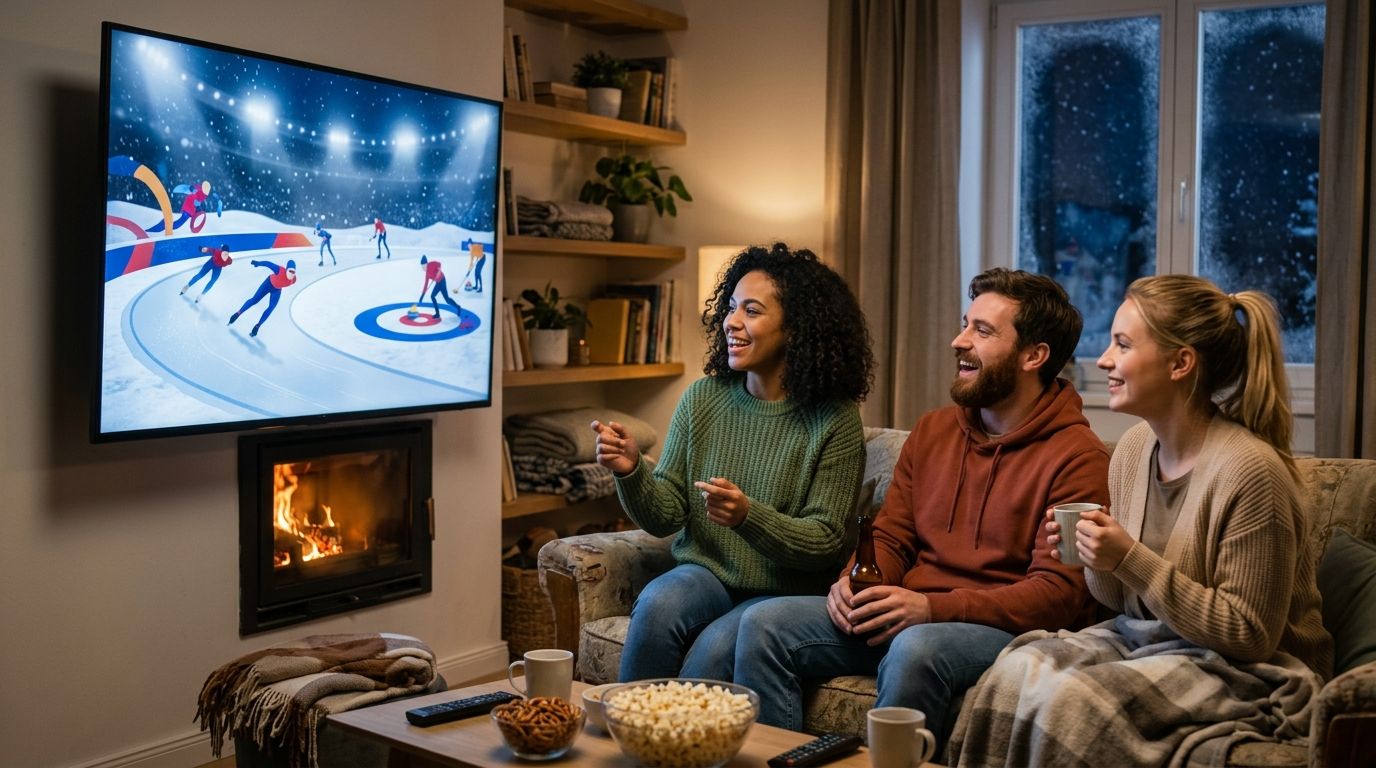
Curling wins as the best overall winter olympics sleeper sport for casual viewers heading into Milano Cortina 2026 — it needs zero prior knowledge, delivers strategy on every stone, and turns into appointment viewing by the semifinals. Best for adrenaline: skeleton. Best for pure chaos: short track speed skating. Best for a quiet-house watch with the kids: biathlon.
- Curling is the best winter olympics sleeper sport overall for casual viewers who want strategy without a rulebook.
- Skeleton delivers the highest adrenaline payoff at speeds over 80 mph face-first on ice.
- Short track speed skating produces the most chaos and upset finishes of any event at Milano Cortina 2026.
- Biathlon rewards patience — a missed rifle shot can undo a 15km lead in seconds.
- Ski jumping is the most visually dramatic event for viewers who want spectacle over stat lines.
Why this matters
Most casual viewers watch two winter olympics events every four years: figure skating and hockey. That leaves a dozen sports getting almost zero American attention despite delivering better drama minute-for-minute. Milano Cortina 2026 runs through February, and NBC's schedule will bury half these events in late-night blocks or streaming-only slots.
Knowing which sleeper sports actually reward your attention — and which ones you can skip without missing anything — saves you from channel-surfing past the good stuff. If you already follow how hockey positions work for the NHL, several of these winter olympics events will click faster than you'd expect.
What makes the best winter olympics sleeper sport
- Rules you can grasp in under two minutes — no rulebook required mid-broadcast
- A built-in stakes moment — one mistake changes the outcome, not a slow point accumulation
- Runs short enough for a commercial-break attention span — under 3 minutes per heat or run
- A visible underdog storyline — smaller nations regularly crash the podium
- Visual payoff — something that looks dramatic even muted with captions on
- Prop and outcome appeal for bettors — clear favorites versus field markets
Winter olympics sleeper sports at a glance
| Sport | Best for | Standout feature | Key limitation |
|---|---|---|---|
| Curling | Strategy lovers | Chess-on-ice decision-making every end | Slow pace early in the match |
| Biathlon | Edge-of-seat tension | Rifle accuracy under exhaustion | Confusing scoring for first-time viewers |
| Skeleton | Adrenaline junkies | 80+ mph face-first descent | Runs last under a minute |
| Short track speed skating | Chaos and upsets | Frequent pack crashes | Results can feel arbitrary |
| Ski jumping | Visual spectacle | Distance plus style scoring | Limited storyline outside distance |
| Luge | Speed-record obsessives | Fastest sliding-sport times on the program | Near-identical runs for casual eyes |
1. Curling: best winter olympics sleeper sport for strategy lovers
Curling looks slow until you realize every shot is a calculated trade-off between offense and defense, closer to chess than to shuffleboard. Teams read ice conditions, plan two or three shots ahead, and a single bad release in the final end can flip a match. Curling rewards patience more than any other event on the winter olympics program.
Curling pros:
- Rules click within one televised end
- Mixed doubles adds a faster, higher-stakes format
- Commentary teams explain strategy in real time better than any other sport on the docket
Curling cons:
- The front half of a match can feel repetitive
- Ice conditions affect outcomes in ways that aren't obvious on screen
Verdict: must-watch, especially mixed doubles for a shorter commitment.
2. Biathlon: best winter olympics sleeper sport for edge-of-seat tension
Biathlon pairs cross-country skiing with rifle marksmanship, and the tension comes from the mismatch — athletes arrive at the range gasping for air and have to steady their hands enough to hit a target the size of a golf ball. Miss a shot, ski a penalty loop, and a comfortable lead disappears in under 30 seconds.
Biathlon pros:
- Constant lead changes throughout a single race
- Penalty loops create visible, immediate stakes
- Mass-start format keeps every competitor in the same frame
Biathlon cons:
- Scoring format (sprint, pursuit, relay) takes a race or two to learn
- Longer distance events run past the 40-minute mark
Verdict: must-watch for the pursuit and mass-start formats specifically.
3. Skeleton: best winter olympics sleeper sport for adrenaline junkies
Skeleton is one athlete, one sled, face-first, hitting speeds past 80 mph down an ice track with no brakes. The entire run lasts under a minute, and a hundredth of a second separates medal contenders. It's the highest adrenaline-to-runtime ratio on the winter olympics schedule.
Skeleton pros:
- Total runtime under 60 seconds per heat
- Visually the most extreme event on the program
- Easy to understand — fastest time wins, full stop
Skeleton cons:
- Four total runs across two days means long gaps between action
- Camera angles sometimes undersell the actual speed
Verdict: must-watch for the final two runs; skip the qualifying heats.
4. Short track speed skating: best winter olympics sleeper sport for chaos and upsets
Short track packs four to six skaters on a tight oval track, and contact is part of the sport. Favorites get taken out by pileups on a routine basis, which makes it the most upset-prone event on the winter olympics calendar. If you like reading grid gaps in F1 qualifying for close-margin drama, short track scratches the same itch on ice.
Short track pros:
- Crashes and disqualifications happen almost every round
- Heats run 90 seconds to 3 minutes — built for short attention spans
- Relay events multiply the chaos across four skaters per team
Short track cons:
- Photo-finish and disqualification calls can frustrate casual viewers
- Results occasionally feel decided by officials rather than athletes
Verdict: must-watch, especially the relay finals.
5. Ski jumping: best winter olympics sleeper sport for visual spectacle
Ski jumping is the one event that looks dramatic with the sound off. Athletes launch off a ramp, hang in the air for several seconds, and get scored on distance plus style points on landing. It's the most photogenic event on the program, and it needs almost no rules knowledge to enjoy.
Ski jumping pros:
- Immediate visual payoff on every jump
- Distance numbers are easy to compare live
- Individual and team formats both run at Milano Cortina 2026
Ski jumping cons:
- Scoring (distance plus style deductions) is opaque without commentary
- Weather delays are common and can shuffle the broadcast schedule
Verdict: worth a look, best in short highlight-reel doses.
6. Luge: best winter olympics sleeper sport for speed-record obsessives
Luge athletes lie on their backs, feet-first, hitting the fastest recorded speeds of any sliding sport at the winter olympics. Four runs across two days determine the medal, and margins routinely come down to hundredths of a second.
Luge pros:
- Fastest speeds of any sport on the winter olympics program
- Doubles competition adds a rare two-person format
- Straightforward scoring — combined time across four runs
Luge cons:
- Runs look similar to casual viewers without a trained eye
- Four-run format means the broadcast spreads across multiple days
Verdict: worth a look for the final runs; skip the early heats.
“A missed rifle shot in biathlon can undo a 15km lead in under 30 seconds — that's the entire appeal in one sentence.”
How we ranked these winter olympics sleeper sports
Each sport got measured against the six criteria above: rule simplicity, built-in stakes, runtime, underdog potential, visual payoff, and betting appeal. Curling topped the list because it satisfies all six without asking much of a first-time viewer. Skeleton and short track scored highest on raw drama-per-minute but lose points for gaps between runs or officiating controversy.
Which winter olympics sleeper sport should you choose?
If you only add one event to your Milano Cortina 2026 watch list, make it curling — it demands the least prior knowledge and pays off the most consistently across a full match. Add skeleton for a five-minute adrenaline hit and short track speed skating for the highest odds of an upset. Biathlon, ski jumping, and luge round out the list depending on whether you want tension, spectacle, or raw speed.
FAQ
What is the best winter olympics sleeper sport for casual viewers?
Curling is the best winter olympics sleeper sport for casual viewers in 2026 because the rules click within one televised end and every match carries clear strategic stakes.
Is biathlon worth watching for a first-time viewer?
Yes — biathlon is worth watching because a missed rifle shot can erase a large lead in under 30 seconds, giving casual viewers a clear moment of tension without needing to understand the full scoring system.
Why is skeleton considered a sleeper sport at the winter olympics?
Skeleton gets little mainstream attention despite athletes hitting speeds over 80 mph face-first on ice, with each run lasting under a minute and margins decided by hundredths of a second.
What makes short track speed skating different from regular speed skating?
Short track packs four to six skaters on a tight oval where contact and crashes are common, making it far more upset-prone than the individual, lane-based long track events.
Is ski jumping easy to understand without watching regularly?
Ski jumping is one of the easiest winter olympics sports to follow casually because distance is intuitive to compare live, even though the full style-point scoring takes commentary to fully explain.
How is luge different from skeleton and bobsled?
Luge athletes ride feet-first on their backs and post the fastest recorded speeds of any sliding sport, while skeleton riders go face-first and bobsled uses multi-person crewed sleds.
When does Milano Cortina 2026 take place?
Milano Cortina 2026 runs through February 2026, with sliding-sport events like skeleton, luge, and bobsled typically scheduled in the opening week.
Which winter olympics sport has the most upsets historically?
Short track speed skating produces the most frequent upsets of any winter olympics event because pack-style racing and contact regularly take out pre-race favorites.
One last thing
The event most casual viewers sleep on hardest isn't on this list at all — it's the mixed doubles curling round robin in the opening week of Milano Cortina 2026, which runs faster and higher-stakes than traditional four-person curling and gets buried in daytime streaming slots most networks don't promote.