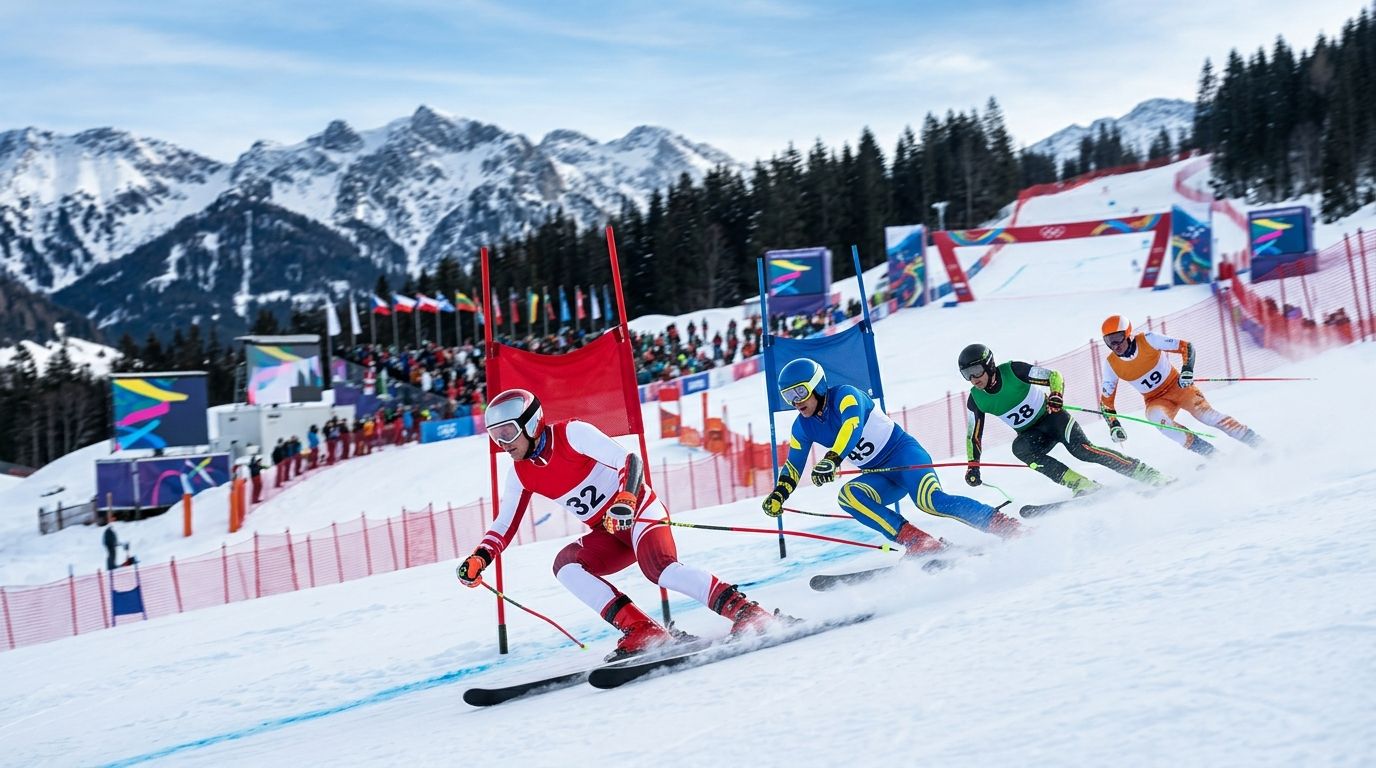
Marco Odermatt walks into Milan-Cortina as the man everybody else is skiing against. Mikaela Shiffrin walks in trying to finally have an Olympics that matches her World Cup resume. Six real medal threats separate them, and this guide ranks all six by what actually wins golds in the Italian Alps this February.
- Marco Odermatt is the best overall pick among winter olympics alpine skiing contenders heading into the 2026 Milan-Cortina Games.
- Mikaela Shiffrin owns the most World Cup race wins in skiing history but has never matched that dominance at an Olympics.
- Federica Brignone carries home-snow pressure as the Italian favorite on courses she already knows.
- Aleksander Aamodt Kilde is the deepest storyline: a serious 2024 crash injury stands between him and a speed-event medal.
- Henrik Kristoffersen has an Olympic slalom silver and zero individual golds — 2026 is his last realistic shot.
Why this matters
Alpine skiing hands out five individual golds per gender at the Winter Olympics, and unlike the World Cup circuit, none of it gets averaged out over a season. One bad gate, one edge catch, and a two-time World Cup champion goes home empty. SportsOrca tracks how these skiers are actually skiing this winter, not just who has the best resume on paper.
That distinction matters more in 2026 than in most cycles. The alpine program runs through the Italian Alps around Cortina d'Ampezzo, terrain several of these racers have already tested on the World Cup calendar — which flattens the usual home-course guesswork and makes current form the real separator.
What makes the best Olympic gold contender
Before ranking anyone, here's what actually separates a real medal threat from a name people just recognize:
- Current-season form — recent World Cup results carry more weight than a résumé from two Olympic cycles ago
- Discipline range — skiers who can podium in two or three events get more cracks at gold than one-event specialists
- Course fit — technical skiers versus speed skiers perform differently on the specific pitches used at these Games
- Health heading into February — alpine skiing chews through ACLs and tibias every single season
- Olympic-stage track record — some racers who dominate the World Cup circuit have historically tightened up under the five-ring pressure
- Depth of competition in their event — a stacked field (like men's slalom) makes gold harder than a thinner one
Alpine skiing gold contenders at a glance
| Skier | Best for | Standout strength | Key limitation |
|---|---|---|---|
| Marco Odermatt | Overall gold favorite | Giant slalom and super-G dominance | Slalom depth still a question mark |
| Mikaela Shiffrin | Slalom redemption | Most World Cup wins in skiing history | Olympic-stage nerves have bitten her before |
| Federica Brignone | Home-crowd pressure | All-around threat across four events | Carries the weight of the host nation |
| Aleksander Aamodt Kilde | Comeback storyline | Elite downhill and super-G speed | Coming back from a serious 2024 injury |
| Lara Gut-Behrami | Women's speed events | Longtime top-five fixture in downhill/super-G | Turns 35 during the Games cycle |
| Henrik Kristoffersen | Men's slalom, unfinished business | Best pure slalom technician on tour | Still chasing his first individual Olympic gold |
1. Marco Odermatt: best overall gold favorite
Odermatt doesn't ski scared, and that's the whole story. The Swiss racer has strung together three straight World Cup overall titles and won giant slalom gold at the 2022 Beijing Games, and he does it by putting down clean, low-risk lines that still come out faster than everyone else's aggressive ones.
Marco Odermatt pros:
- Wins giant slalom and super-G with margin, not luck
- Already has Olympic gold on his résumé from Beijing
- Rarely has an off week across a full World Cup season
Marco Odermatt cons:
- Slalom remains the one discipline where he's not the clear favorite
- Overwhelming favorite status means anything short of gold reads as disappointment
Best for: bettors and fans who want the safest pick across multiple alpine events. Verdict: Buy.
“Odermatt doesn't need a perfect run to win the gold — he just needs everyone else to have a bad one.”
2. Mikaela Shiffrin: best for slalom redemption
Shiffrin has already won Olympic gold twice — slalom in Sochi 2014, giant slalom in PyeongChang 2018 — and she owns the record for most World Cup race wins in the sport's history. Beijing 2022 was the outlier: she skied out early in both her signature events and never got a real shot at a medal.
Mikaela Shiffrin pros:
- The most accomplished slalom technician in the sport right now
- Multi-event threat in slalom and giant slalom
- Motivated by an Olympic cycle that didn't go her way
Mikaela Shiffrin cons:
- Olympic slalom runs have gone sideways for her before, literally
- One bad gate erases an entire season of World Cup dominance
Best for: anyone betting on the slalom specifically rather than the overall medal count. Verdict: Buy.
3. Federica Brignone: best for the home-crowd storyline
Brignone comes into 2026 as Italy's biggest hope on snow her country knows better than anyone else in the field. She's already an Olympic medalist from Beijing and enters this cycle coming off a World Cup overall title, which means she's not just a hometown story — she's a legitimate all-around threat in giant slalom and super-G.
Federica Brignone pros:
- Comfort and course knowledge in the Italian Alps that visiting skiers can't replicate
- Threatens multiple events, not just one
- Coming off her best World Cup season
Federica Brignone cons:
- Host-nation pressure has derailed favorites at past Olympics
- Faces a deeper technical field than Odermatt does on the men's side
Best for: fans who want the emotional pick with real medal odds behind it. Verdict: Buy.
4. Aleksander Aamodt Kilde: best comeback storyline
Kilde was one of the best downhill and super-G skiers on the planet before a brutal crash at Wengen in January 2024 tore up his leg and knocked him out for an extended stretch. Every race he enters in the run-up to 2026 is as much a health check as a form check.
A fit Kilde is a top-three finisher in any downhill on the calendar. An unfit Kilde doesn't make the start gate. That binary makes him the single biggest wildcard in this field.
Aleksander Aamodt Kilde pros:
- Elite-level speed when healthy, with multiple World Cup speed globes to his name
- Won an Olympic medal in Beijing even before this comeback arc
- Downhill and super-G double threat
Aleksander Aamodt Kilde cons:
- Health is the entire question mark, not form
- Limited race reps this cycle compared to full-season rivals
Best for: the dark-horse pick if he's cleared to race at full intensity. Verdict: Hold until his pre-Games results confirm he's back to full speed.
5. Lara Gut-Behrami: best for women's speed events
Gut-Behrami has been a fixture at the front of downhill and super-G start lists for over a decade, and she's not chasing a breakthrough — she's chasing one more Olympic run before the window closes. Her consistency across a full World Cup season is what keeps her in this conversation year after year.
Lara Gut-Behrami pros:
- Sustained top-five results in speed events across multiple seasons
- Already an Olympic medalist
- Handles pressure races better than most of the field
Lara Gut-Behrami cons:
- Faces a younger, deep field in both downhill and super-G
- Fewer discipline options than an all-arounder like Brignone
Best for: downhill and super-G specific bets rather than a multi-event parlay. Verdict: Hold.
6. Henrik Kristoffersen: best for men's slalom, unfinished business
Kristoffersen has been the most technically sound slalom skier on tour for years and still doesn't have an individual Olympic gold to show for it — a silver in Beijing 2022 is as close as he's come. Norway's mixed-team gold from that same Games is nice, but everyone around this sport knows it's not the same as standing alone on top of the individual podium.
Henrik Kristoffersen pros:
- Elite slalom technique with a long track record of World Cup wins
- Already has Olympic hardware, so the pressure of "never medaled" isn't in play
- Motivated by the exact gap in his résumé
Henrik Kristoffersen cons:
- Men's slalom is arguably the deepest field of any alpine event in 2026
- History shows he tends to finish second to whoever skis the cleanest final run
Best for: slalom purists looking for the technician's pick over the favorite. Verdict: Hold.
Track every Team USA medal shot
See which Americans are actually medal threats across every Winter Olympics sport.
How we ranked these contenders
Every name on this list checked the same boxes: 2025-26 World Cup form, discipline range, course fit for the Italian Alps venues, health status heading into February, and how they've historically handled Olympic pressure compared to a normal World Cup weekend. Odermatt and Shiffrin lead because they check every box; Kilde ranks lower only because his health, not his ability, is the open question.
Which alpine skier should you bet your bracket on?
If you need one name for the top of your bracket, it's Marco Odermatt — the most complete skier in the field with the fewest ways to lose. If you're betting on drama, Mikaela Shiffrin's slalom redemption arc and Aleksander Aamodt Kilde's health-permitting comeback are the two storylines worth the risk. For a straight home-nation upset pick, Federica Brignone gives you both the talent and the crowd.
FAQ
Who is the favorite among winter olympics alpine skiing contenders for 2026?
Marco Odermatt enters the 2026 Milan-Cortina Games as the favorite based on three straight World Cup overall titles and his 2022 Olympic giant slalom gold. He's the most complete skier across giant slalom and super-G.
Has Mikaela Shiffrin won Olympic gold before?
Yes. Shiffrin won slalom gold at the 2014 Sochi Games and giant slalom gold at the 2018 PyeongChang Games. She struggled at the 2022 Beijing Games, skiing out early in both of her signature events.
Is Aleksander Aamodt Kilde healthy enough to medal in 2026?
That's the biggest open question in the field. Kilde suffered a serious leg injury in a January 2024 crash at Wengen, and his medal chances at Milan-Cortina depend entirely on how his pre-Games World Cup results look.
Who is Italy's best hope for an alpine skiing gold medal?
Federica Brignone is Italy's top alpine threat heading into the Games, racing on terrain in the Italian Alps she already knows from the World Cup calendar. She's a multi-event threat in giant slalom and super-G.
Has Henrik Kristoffersen ever won an individual Olympic gold?
No. Kristoffersen won slalom silver at the 2022 Beijing Games and a mixed-team gold that same year, but an individual Olympic gold has eluded him despite years of World Cup slalom dominance.
What makes alpine skiing hard to predict at the Olympics compared to the World Cup?
The Olympics compress a full season of racing into single elimination-style runs. A skier can dominate the World Cup circuit all year and still go home without a medal after one bad gate or one edge catch in February 2026.
Which alpine skiing event has the deepest field in 2026?
Men's slalom is widely considered the deepest field, with Henrik Kristoffersen facing a stacked group of technicians where a clean final run, not raw talent, usually decides gold.
One last thing
The skier to watch closest in the week before the opening ceremony isn't on this list by name — it's whichever contender posts a surprise podium in a World Cup speed event on the actual Milan-Cortina courses. Olympic alpine skiing rewards racers who've already felt the snow under their skis, and in 2026 that local knowledge could matter more than any World Cup globe count.