NFL positions explained for new fans starts with one number: 22. Eleven players line up on offense, eleven on defense, and every one of those slots has a job that looks nothing like the guy next to him. New fans get lost fast because broadcasts throw out labels — nickel corner, Mike linebacker, X receiver — without ever pausing to define them. This guide fixes that, position group by position group, so the next broadcast makes sense instead of sounding like a foreign language.
- NFL positions explained for new fans breaks down all 22 starting roles across offense, defense and special teams.
- Quarterback, offensive line and cornerback are the three positions that decide most 2026 outcomes — learn those first.
- Fantasy football rosters group positions differently than real NFL defenses, which trips up new fans constantly.
- Player props tied to position (QB passing yards, RB rushing attempts) only make sense once the role is clear.
Why NFL positions matter for new fans
A new fan watching a 2026 Sunday slate without position knowledge is watching static. The quarterback throws to somebody — but which somebody, and why does the safety keep backing off the line before the snap? Position literacy is the difference between following the game and following a scoreboard.
It also matters for anything beyond passive viewing. Fantasy football drafts, SportsOrca game breakdowns, and player prop bets are all organized by position — a running back prop means nothing if you can't spot a running back pre-snap. Learn the roles once and every other layer of the sport opens up.
Learn the offensive skill positions first
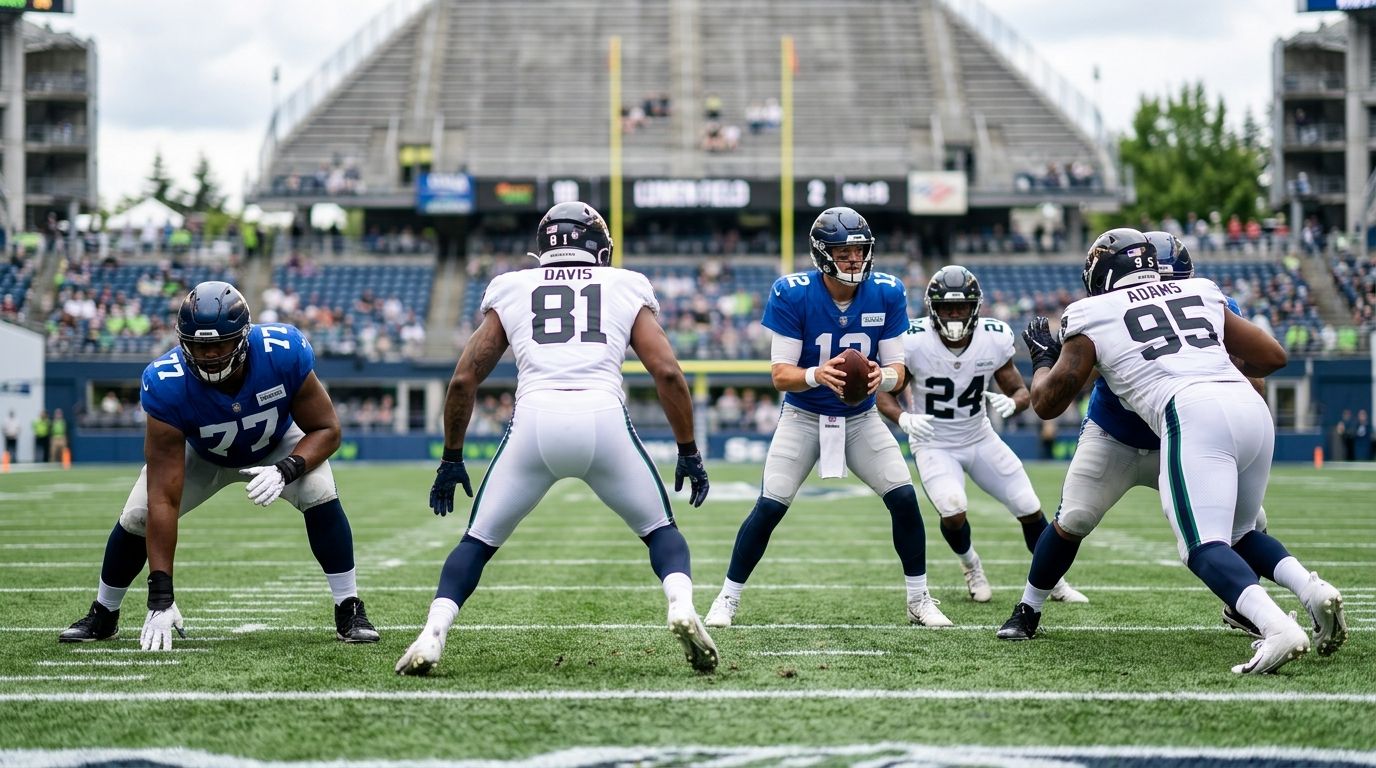
The quarterback, running back, wide receiver, and tight end are the positions that touch the ball and show up on every highlight. Start here because they're the easiest to spot and the most discussed on any broadcast.
- Quarterback (QB) — takes the snap, reads the defense, throws or hands off. Every offense in 2026 is built around this one player.
- Running back (RB) — lines up behind or beside the QB, runs the ball, catches short passes out of the backfield.
- Wide receiver (WR) — lines up wide of the formation, runs routes to get open downfield.
- Tight end (TE) — lines up next to the offensive line, blocks like a lineman on some plays and runs routes like a receiver on others.
- Fullback (FB) — rare in 2026 offenses, but when it shows up it's a lead blocker for the running back.
Map the offensive line
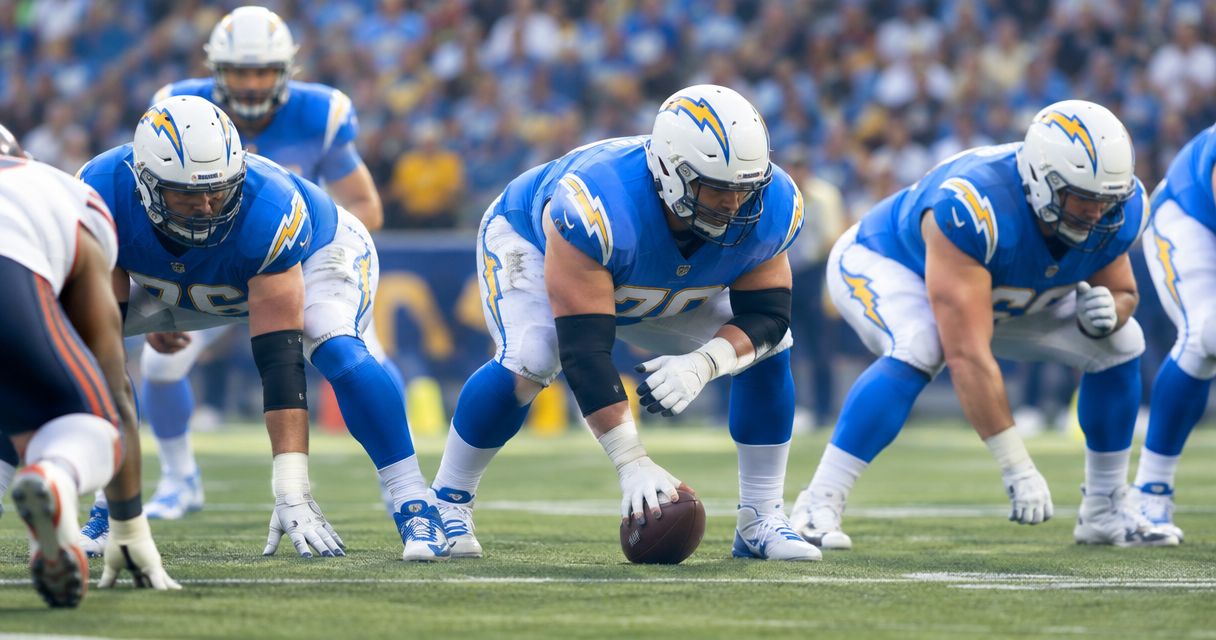
New fans skip the offensive line because it never touches the ball — that's the mistake. Five players up front decide whether the quarterback has time to throw and whether the running back has a lane. Nobody on a broadcast points a camera at them, which is exactly why they're worth learning.
- Center (C) — snaps the ball, calls protection adjustments.
- Guards (LG/RG) — flank the center, handle interior pass rushers and run-blocking angles.
- Tackles (LT/RT) — protect the edges, with the left tackle historically guarding the QB's blind side.
- Protection schemes — sliding protection, max protect, and six-man fronts all start with these five.
- Snap count awareness — watching who moves first at the snap reveals the scheme before the play even develops.
For a deeper look at how this group is graded, the advanced stats breakdown for offensive line play covers pressure rate and run-block win rate — the numbers that separate a good line from a bad one in 2026.
Identify the defensive front
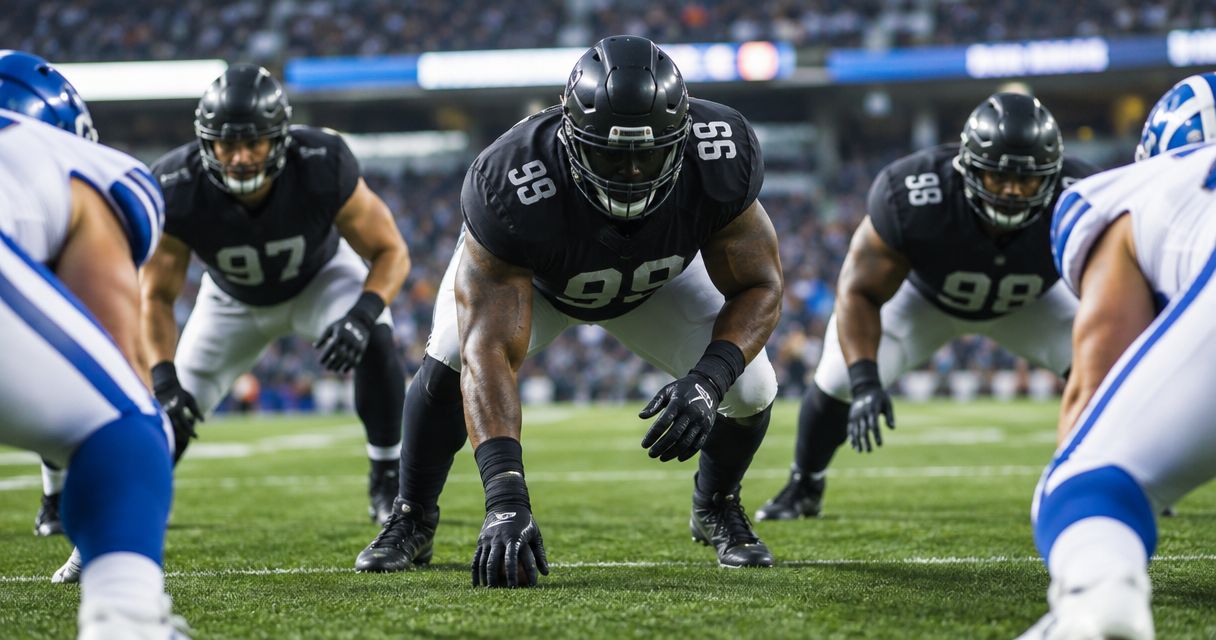
The defensive front is the mirror image of the offensive line — three to four players whose entire job is getting to the quarterback or stuffing the run. New fans confuse defensive tackle with defensive end constantly; the difference is where they line up and what they're asked to do.
- Defensive tackle (DT) — lines up over the interior of the offensive line, occupies blockers, stops the run up the middle.
- Defensive end / EDGE — lines up on the outside, rushes the passer or sets the edge against outside runs.
- Linebackers (LB) — line up behind the front, read the play, fill run gaps or drop into coverage.
- Mike, Will, Sam — the three traditional linebacker labels (middle, weak-side, strong-side), still used in 2026 defensive playcalling.
- Blitz packages — extra rushers sent from the linebacker or secondary group to speed up the pass rush.
Learn the secondary
The secondary — cornerbacks and safeties — is where most new-fan confusion lives, because assignments shift snap to snap based on coverage call. Once you know what each role is supposed to do, the pre-snap shifts start making sense instead of looking random.
- Cornerback (CB) — covers wide receivers man-to-man or in zone, lines up outside.
- Nickel corner — a fifth defensive back who covers the slot receiver in pass-heavy sets.
- Free safety (FS) — plays deep, reads the quarterback's eyes, helps over the top.
- Strong safety (SS) — plays closer to the line, supports the run, covers tight ends.
- Zone vs. man coverage — zone assigns a spot on the field, man assigns a specific receiver; learning which is called pre-snap is the single fastest way to read a defense.
Know the special teams roles
Special teams gets ignored by new fans until a missed field goal decides a game, and by then it's too late to have learned the roles. A handful of specialist positions cover almost every special teams snap.
- Kicker (K) — handles field goals and kickoffs.
- Punter (P) — handles fourth-down punts, sometimes holds for field goals.
- Long snapper (LS) — snaps directly to the punter or holder on kicks, a specialist job most fans never notice.
- Return specialists — a WR or CB who fields kickoffs and punts, valued for speed and ball security.
- Gunners — the two players who sprint downfield on punts to make the tackle.
Use fantasy rosters to reinforce what you've learned
Fantasy football groups positions differently than a real NFL depth chart, and that mismatch confuses more new fans than any other single thing. A fantasy flex slot can be a WR, RB, or TE — a real NFL playbook has no such position.
- Draft one roster and track only the positions you just learned — QB, RB, WR, TE.
- Skip defensive rankings for your first season; fantasy defense (DST) scores by team, not by individual defensive position.
- Compare a real depth chart to your fantasy roster weekly to see how starters and backups shift.
- Watch how running back free agents move between teams each offseason — it's the fastest way to see position value in action.
- Note snap-count percentage, not just stats — a WR who plays 40% of snaps isn't a real starter no matter what last week's box score said.
Put position knowledge into a bet
See which sportsbooks and props reward knowing the roles.
Comparison: ways to learn NFL positions
| Method | Best for | Key limitation |
|---|---|---|
| Broadcast graphics | Live game viewers | Shows the label, not the assignment |
| Team depth charts | Fantasy drafters | Lags behind camp battles and injuries |
| Coaching film breakdowns | Fans wanting scheme detail | Requires more time than a casual fan has |
| Position-group guide (this one) | First-time viewers | Doesn't cover every sub-package like dime or big nickel |
| Fantasy football rosters | Casual bettors and DFS players | Groups positions differently than real defenses |
Verdict: for a first-time viewer in 2026, a position-group guide paired with one season of fantasy football teaches the roles faster than film study alone.
Common mistakes new fans make
- Treating cornerback and safety as interchangeable — they line up differently and cover different areas; mixing them up misreads every coverage shell.
- Ignoring the offensive line entirely — the line decides whether every other position on offense gets a chance to work.
- Assuming fantasy positions mirror real defense — DST scoring hides which individual defenders actually made the plays.
- Betting player props without checking snap share — a backup RB with a great matchup still won't hit a rushing prop if he's playing 20% of snaps.
- Skipping special teams — a blocked punt or missed field goal swings games as often as a busted coverage.
FAQ
What are the 11 offensive positions in the NFL?
The 11 offensive starters are QB, RB, wide receivers, TE, and five offensive linemen — center, two guards, two tackles. Formations shift the WR, TE and RB count, but the total on the field stays at 11.
What are the 11 defensive positions in the NFL?
A base defense runs four defensive linemen, three linebackers, two cornerbacks and two safeties. Nickel and dime packages swap linebackers for extra defensive backs depending on the offense's personnel.
What is the hardest NFL position to learn as a new fan?
The secondary is the hardest to read because cornerback and safety assignments change every snap based on the coverage call. Offensive skill positions stay visually consistent play to play.
Is a nickel corner a real starting position?
Yes. Most 2026 NFL defenses use nickel packages with five defensive backs as their standard look because offenses deploy three-receiver sets so often, making the nickel corner a full-time starter on many rosters.
Do fantasy football positions match real NFL positions?
Not exactly. Fantasy uses flex slots that combine RB, WR and TE, and defense scores as one team unit instead of by individual position, which differs from how a real NFL depth chart is built.
Why does the offensive line matter if it never touches the ball?
The offensive line sets pass protection time and running lanes. Without it, a quarterback with elite arm talent still gets sacked and a running back with elite speed still gets stopped at the line.
What does EDGE mean in NFL positions?
EDGE describes a player who lines up outside the defensive line to rush the passer or defend outside runs. The term replaced the strict defensive end label as those duties blended with outside linebacker work.
How many players are on an NFL roster versus a game-day roster?
Teams carry a 53-man roster during the 2026 season but dress only 48 players on game day. That means five are inactive every week even with no injuries involved.
One last thing
Most new fans assume every rostered player sees the field — they don't. NFL teams dress 48 players out of a 53-man roster every single game in 2026, and the inactives are almost always backups at the deepest position groups, usually offensive line and linebacker. Check the inactive list before kickoff and you'll spot roster depth issues before the broadcast ever mentions them.