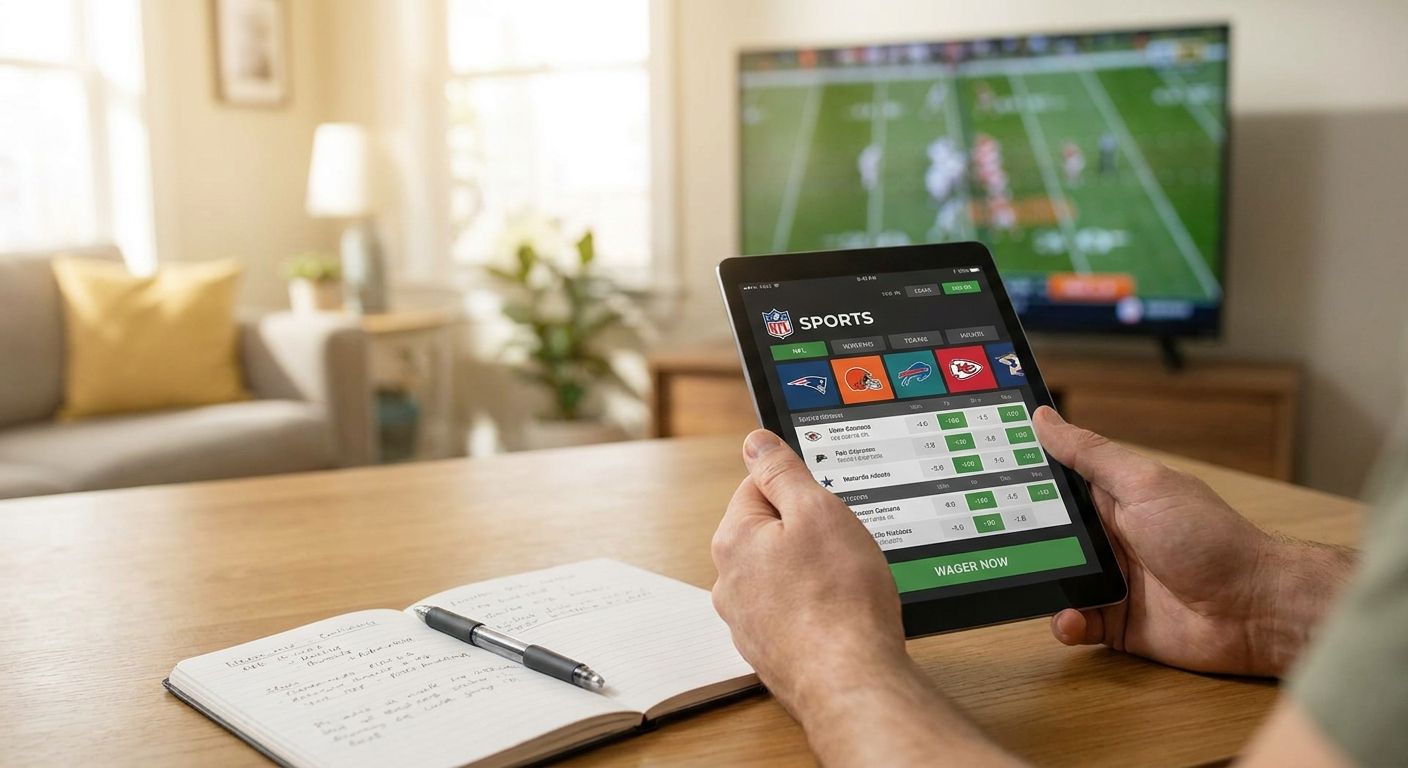
A same-game parlay for NFL Sunday means anchoring one confident bet — a spread, moneyline, or game total — then stacking two to four correlated props from that same matchup, never legs that cancel each other out. The fifth leg is the trap: every additional leg compounds the sportsbook's built-in margin, so your true win odds shrink faster than the advertised payout grows.
- Building a same-game parlay for NFL Sunday works best with 2-4 correlated legs from one matchup, not five-plus unrelated props.
- Anchor the slip with a spread or moneyline you already like, then add props that move with that outcome, like a quarterback's passing yards next to his team's implied total.
- Skip anti-correlated legs, like a team winning big while its lead running back goes under on carries — those two outcomes fight each other.
- Same-game parlay pricing varies by sportsbook because each one grades leg correlation differently, so the line is worth shopping before you lock the slip.
Why this matters
Sunday's slate gives you 13 or 14 games and a same-game parlay lets you turn one matchup into a single, bigger-swing bet instead of scattering smaller wagers across the board. The catch is that most bettors build these slips backward — they pick the biggest possible payout number first and reverse-engineer legs to hit it, instead of starting from a game read they actually trust.
A better process starts with matchup analysis, the same read you'd use to break down NFL player props for parlay bettors, and only turns that read into a parlay once the individual legs make sense on their own. If a leg wouldn't be a good straight bet by itself, it doesn't belong in a same-game parlay just because it boosts the number on the slip.
How do you build a same-game parlay for NFL Sunday
Follow this order every week and you'll cut down on slips that look good Saturday night and fall apart by the second quarter.
- Pick your anchor bet first. Start with the spread, moneyline, or total you'd bet on its own — the one leg you'd put money on with no parlay attached.
- Layer in a correlated player prop. If you like the favorite to cover, a receiver on that team going over receiving yards moves in the same direction as your anchor. If you like the underdog to keep it close, their starting quarterback's passing yardage prop correlates with a competitive script.
- Add a game-script leg, not a random one. A high game total pairs naturally with over props for both teams' pass-catchers; a low total pairs with rushing-heavy game scripts and under props on passing yardage.
- Check for anti-correlation before you submit. A team winning by two scores usually means its starting running back sees fewer competitive-game carries in the fourth quarter — don't stack a blowout win with an over on that back's rushing yards.
- Cap the leg count at three or four. Each leg you add multiplies the odds against hitting all of them, and the payout increase rarely offsets the drop in your realistic hit rate once you're past four legs.
- Shop the number across books before locking it. Same-game parlay pricing on identical legs is not identical from book to book — comparing sportsbooks built for player prop betting before you commit to a slip is standard practice for anyone parlaying weekly.
Correlated vs. anti-correlated legs, side by side
| Leg type | Example pairing | Why it works or doesn't |
|---|---|---|
| Correlated | Favorite -7 + favorite's WR1 over receiving yards | Both outcomes need the same game script to hit |
| Correlated | Game over 47.5 + both QBs over passing yards | High total usually means both offenses move the ball through the air |
| Anti-correlated | Team wins by 14+ + their RB1 over rushing yards | Big leads often mean fewer late-game rushing attempts |
| Anti-correlated | Underdog +9.5 covers + underdog's defense scores a TD | A defensive score for the dog usually means the favorite's offense is struggling, which cuts against a tight final score |
Get matchup breakdowns before kickoff
Fresh NFL analysis and prediction coverage for every Sunday slate.
Why same-game parlay odds vary
The number a sportsbook quotes for the exact same three-leg slip can differ noticeably from app to app. A handful of factors drive that:
- Leg count — each added leg multiplies the combined odds and the book's hold on the slip.
- How the book prices correlation — some sportsbooks discount correlated legs more aggressively than others, since paying out on legs that move together is riskier for them.
- Player prop market depth — a book offering deeper player prop menus can build tighter, more specific same-game parlays than one with a thin prop board.
- Line movement before kickoff — a slip built Tuesday and locked Sunday morning can carry different pricing once odds move ahead of kickoff.
- Promotional boosts — some books run leg-specific profit boosts on marquee Sunday games that change the effective payout on an otherwise identical slip.
Is a same-game parlay a good bet for NFL Sunday?
A same-game parlay is a good bet only when every individual leg is one you'd take on its own — the parlay format should combine good bets, not manufacture a big number from mediocre ones. Treat it like a three- or four-bet mini-portfolio on one game rather than a lottery ticket, and you'll size it correctly relative to the rest of your Sunday action.
How many legs should a same-game parlay have?
Three to four legs is the sweet spot for most NFL Sunday same-game parlays, balancing a meaningful payout bump against a realistic hit rate. Past four legs, each addition drags your combined win probability down faster than the payout compensates, which is why long same-game parlays hit far less often than bettors expect going in.
Can you hedge a same-game parlay mid-game?
Yes, hedging a same-game parlay means placing a smaller opposite bet once some of your legs hit, locking in profit regardless of how the remaining legs finish. It only works cleanly on sportsbooks that offer live, in-game betting on the same matchup, and it requires the hedge bet to be sized correctly against your original parlay's potential payout — guessing at the math in real time during a live game is where most hedges go wrong.
Anyone building weekly slips should also read through SportsOrca's guide to building a winning NBA parlay — the correlation logic carries over across sports even though the props themselves are different. And on weeks where a same-game parlay feels too risky, a single underdog moneyline bet built around real value is often the smarter Sunday play.
FAQ
What is a same-game parlay?
A same-game parlay combines multiple bets from one single game into a single slip, such as a spread, a player prop, and a game total, all needing to hit for the parlay to pay out.
How many legs should a same-game parlay have for NFL Sunday?
Three to four legs is the sweet spot for most NFL same-game parlays. Adding a fifth or sixth leg usually lowers your realistic hit rate faster than it raises the payout.
Is a same-game parlay better than separate straight bets?
Neither is universally better — a same-game parlay pays more on a smaller stake but needs every leg to hit, while straight bets pay individually and carry lower variance overall.
Can you combine props from two different NFL games in a same-game parlay?
No, a same-game parlay by definition uses legs from one game only. Combining legs across multiple games is a standard parlay, not a same-game parlay, and it removes the correlation benefit entirely.
What legs correlate well in an NFL same-game parlay?
A favorite covering the spread pairs well with that team's top receiver going over receiving yards, since both outcomes depend on the same team controlling the game.
What legs should you avoid pairing together?
Avoid pairing a lopsided win with a running back's rushing total going over, since blowout wins often mean fewer meaningful carries in the fourth quarter.
Do same-game parlay odds differ between sportsbooks?
Yes, the same three-leg slip can price differently across sportsbooks because each one grades leg correlation and prop depth differently, so shopping the line matters.
Can you cash out or hedge a same-game parlay before the game ends?
Yes, hedging a same-game parlay mid-game means placing an opposite bet once some legs hit to lock in profit, but it only works on books offering live in-game betting on that matchup.
One last thing
The leg that ruins most NFL same-game parlays isn't the risky one you agonized over — it's the "safe" moneyline leg on a heavy favorite that you added just to pad the payout. That leg rarely changes your win probability much, but it does tie up the whole slip on an outcome that was already close to a lock, meaning you've traded upside for almost nothing. If a leg wouldn't move the needle as a standalone bet in 2026, cut it before you submit the slip.