Rebuilding-franchise NBA draft analysis is a long-range ranking of prospects with the aim of finding players who can anchor a competitive roster after the teardown ends. For 2026, best-player-available wins unless a trade-down offer adds enough future draft value to justify leaving the top prospect.
- NBA mock draft prospects rebuilding teams need combine star upside, four-season control and a realistic development path.
- SportsOrca's verdict: rebuilding teams should favor best player available over short-term positional need.
- The three worst records each carry 14.0% odds for the No. 1 pick in the 2026 NBA Draft.
- First-round rookie contracts can provide four controlled seasons through team options in years three and four.
- Trading down works when the added draft value outweighs the prospect tier lost in the move.
Why NBA prospect evaluation matters for rebuilding franchises
Lottery night can move a franchise several years forward or leave it searching for another cornerstone. The same front office also has to decide whether veterans belong beside that pick or on the market for more assets, which makes the NBA trade candidates for rebuilding teams part of the same decision tree.
The NBA lottery format introduced in 2019 gives each of the three worst records a 14.0% chance at the No. 1 selection. The first four picks are drawn; the remaining lottery teams are ordered by regular-season record. Finishing last therefore protects draft position differently than it improves the chance of winning the first pick.
Rebuilding teams also face a longer evaluation window than contenders. A contender asks whether a rookie can defend a playoff matchup next season. A rebuilding franchise asks whether his shooting, decision-making and defensive role can survive when the roster becomes competitive in 2028 or 2029.
SportsOrca's NBA mock draft framework is best for fans comparing how rebuilding franchises should value upside, control years, roster fit and trade options in 2026. Its limitation is access: public analysis cannot replace private medical reports, interviews or team workouts.
How to rank 2026 NBA prospects for a rebuild
Start with free tools: game film, official measurements, roster contracts and the published lottery table. The board should explain why each prospect fits the rebuild rather than copying the order from a general mock draft.
Define your rebuild timeline
A board without a timeline confuses immediate production with long-term value. Write two roster views before ranking anyone: the next 12 months and the next 36–48 months. The first shows where a rookie can play; the second shows which current needs may disappear before the team is ready.
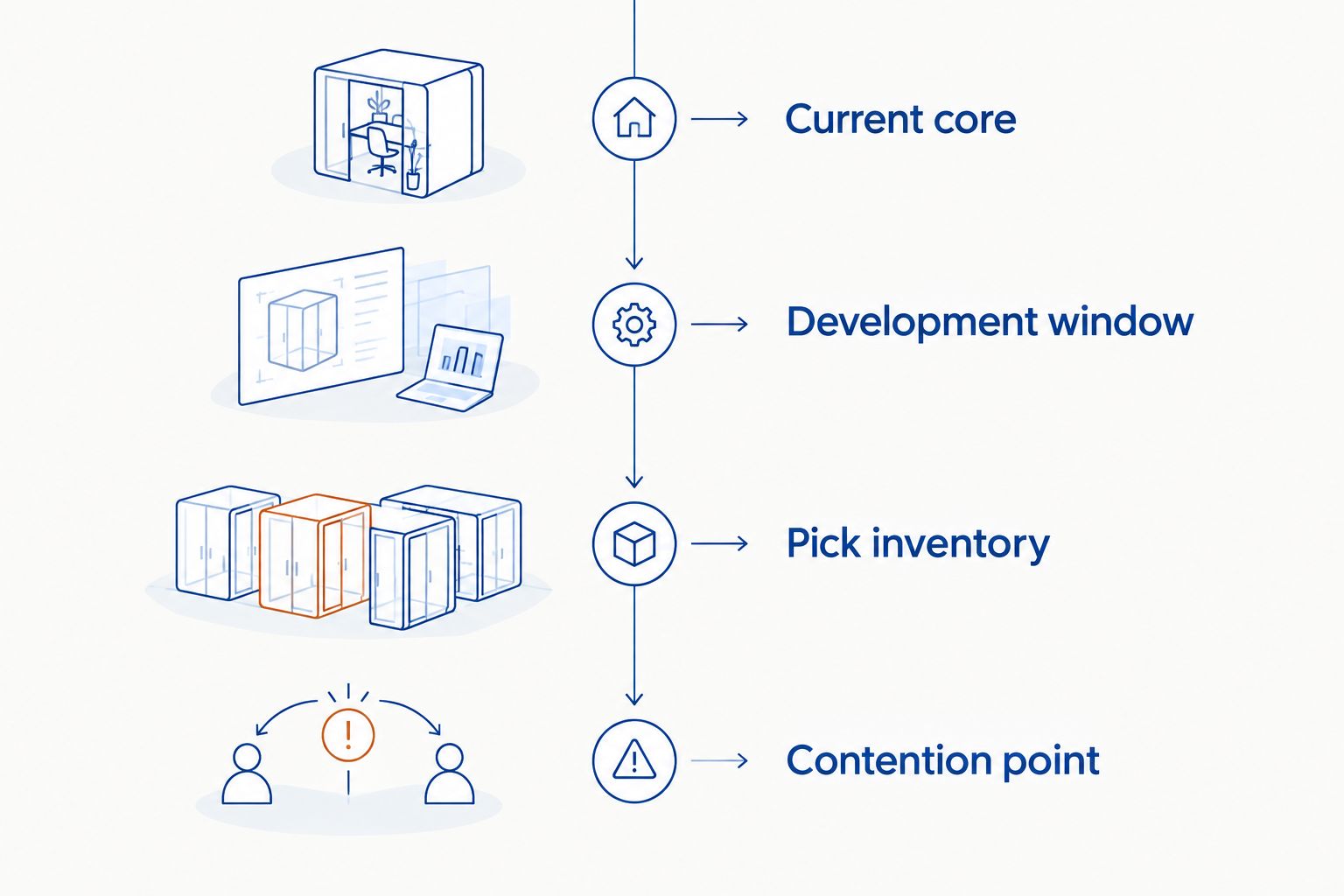
- List the current core and the remaining contract control for each player
- Set a development window for raw prospects who need extended minutes
- Record the pick inventory available in the next several drafts
- Mark the expected contention point before assigning positional priorities
- Separate temporary roster holes from positions lacking a long-term answer
Build a skill-priority board
Watch full possessions before highlights. A made jumper reveals the result, but the possession reveals whether the player relocated, created separation, read the help defender or benefited from a broken coverage. That context decides which skills translate against NBA size and speed.
SportsOrca treats the box score as a starting point, not a final grade. Rebuilding teams need skills that scale beside future stars: quick decisions, shooting gravity, defensive versatility and creation against a set defense.
- Grade shot creation separately from catch-and-shoot efficiency
- Track decisions after the first defender stops the initial action
- Separate point-of-attack defense from off-ball awareness
- Identify one skill that earns the prospect early rotation minutes
- Identify one weakness that can keep the prospect off the floor
Measure contract control against development time
A first-round rookie scale contract spans four seasons when the team exercises its options for years three and four. That runway lets a rebuilding franchise develop a teenager or raw sophomore without paying an immediate veteran salary for the same roster role.
Contract control still has a clock. If a prospect needs most of those four seasons merely to become playable, the team reaches its next contract decision without much evidence that he can contribute to winning. The NBA salary cap rules for casual fans provide the wider context for rookie deals, extensions and restricted free agency.
- Match the prospect's development estimate to the four-season control window
- Flag players who require both major skill repair and physical development
- Compare expected year-three impact rather than only rookie production
- Account for restricted free agency after the rookie contract
- Treat second-round contract control separately from first-round control
Model every lottery outcome
The three worst records share 14.0% odds for the first pick in 2026, but their possible landing spots are not identical. A rebuilding team needs several boards because the lottery can push it outside the prospect tier it expected to select from.
Do not build one mock and call the work finished. Build a top-four plan, a middle-lottery plan and a trade-down plan. Each should show which prospect tier remains available and which offer would justify moving.
- Rank prospects in tiers instead of forcing tiny differences between adjacent names
- Prepare a board for each realistic lottery landing spot
- Mark the final prospect who carries primary-creator upside
- Record which roster needs can wait until a later pick
- Set a trade-down threshold before draft-night pressure arrives
Rank talent before positional need
A weak rebuilding roster rarely has only one problem. Drafting for the current depth chart can produce a clean fit in October and a talent deficit two years later, especially after trades and free agency reshape the lineup.
Best player available is not a demand to ignore context. It means positional need breaks a close tie rather than moving a lower-tier prospect above a potential franchise centerpiece. Two young ball-handlers can share the floor or become trade assets; missed star upside cannot be recovered as easily.
- Complete the talent board before adding roster-fit notes
- Use positional need only within the same prospect tier
- Favor skills that work with several lineup types
- Avoid passing on creation merely because a young guard is already present
- Revisit positional priorities after every trade involving the current core
Stress-test the development path
Upside matters only when the franchise can supply minutes, coaching attention and a role that permits mistakes. A raw center gains little from sitting behind two established bigs, while a developing guard can stall if every possession requires him to create without spacing.
Project the first 24 months in concrete basketball terms. Decide which position the prospect defends, where his shots come from and who handles the ball beside him. If those answers stay vague, the development plan is incomplete.
- Assign a likely offensive role for the rookie season
- Name the defensive matchup the prospect can handle first
- Check whether the roster provides adequate shooting around a creator
- Reserve rotation minutes before assuming regular game experience
- Define the skill improvement required before the prospect closes games
Compare the pick with trade-down value
Trading down is not automatically smart because a rebuild wants more picks. The move works only when the incoming assets compensate for crossing a meaningful prospect tier. Leaving a likely primary creator for two uncertain future selections can extend the rebuild rather than strengthen it.
The opposite mistake is refusing every offer because the current pick feels rare. A balanced 2026 board grades the player available and the package offered on the same timeline.
- Identify the final prospect worth keeping at the original slot
- Demand more value when a trade crosses into a lower prospect tier
- Check protections on every future selection in the offer
- Compare future picks by expected timing and roster trajectory
- Keep the pick when no package replaces its realistic upside
Options for rebuilding franchises
No single draft strategy wins in every slot. SportsOrca favors best player available for an early-stage rebuild, while trade-down value becomes stronger when several remaining prospects share the same grade.
| Option | Best for | Main advantage | Key limitation |
|---|---|---|---|
| Best player available | Teams at least several moves from contention | Preserves access to the highest projected ceiling | Can create a temporary positional overlap |
| Draft for need | Teams with an established core and one clear gap | Gives the rookie a defined role immediately | Encourages reaches when the talent tiers differ |
| Trade down | Teams facing a flat prospect tier | Adds future assets without abandoning a comparable grade | Sacrifices access to the highest remaining ceiling |
| Draft-and-stash | Teams without immediate roster minutes | Delays the roster decision while retaining prospect rights | Delays evaluation against NBA competition |
| Second-round specialist | Teams needing affordable role depth | Targets one translatable skill for a narrow role | Carries less contract certainty and lower star probability |
The key distinction is prospect tier. If one player sits alone at the top of the board, keep the pick. If four players share the same grade and another team wants to move up, trading down can add an asset without materially lowering the expected outcome.
Common mistakes rebuilding franchises make
Treating the current depth chart as permanent
A rebuilding roster changes quickly. Drafting a lesser prospect because one position looks occupied mistakes temporary depth for a settled core.
Confusing athletic testing with basketball upside
Speed, reach and jumping ability expand possibilities, but they do not create processing speed or touch. The mistake is treating physical tools as the finished skill rather than the material a development staff must shape.
Ignoring the player's pathway to minutes
A prospect cannot develop through theory alone. If the roster blocks his position and the coaching staff cannot offer a defined role, the team must change the rotation or reconsider the fit.
Overreacting to one tournament run
A short postseason burst can reveal performance under pressure, but it does not erase a full season of shooting, decision-making or defensive evidence. Recheck the complete sample before moving a prospect into a new tier.
Assuming every future pick has equal value
A protected selection from a strong team is not interchangeable with an unprotected pick from an unstable roster. Trade-down analysis fails when the front office counts picks instead of grading their likely range, timing and protections.
FAQ
What makes a strong NBA prospect for a rebuilding franchise?
A strong rebuilding prospect combines high-end upside with at least one skill that earns early minutes. The franchise also needs a realistic plan for his role, development and four-season rookie contract window.
Should rebuilding teams draft the best player available?
Rebuilding teams should draft the best player available when prospects sit in different talent tiers. Positional need should break close ties rather than push a lower-ceiling player above a potential cornerstone.
How do NBA Draft lottery odds work in 2026?
The three worst regular-season records each receive a 14.0% chance at the No. 1 pick in 2026. The lottery draws the first four selections, then orders the remaining teams by record.
How long does an NBA first-round rookie contract last?
An NBA first-round rookie contract can cover four seasons. The first two seasons are guaranteed, while the team controls options for years three and four.
When should a rebuilding franchise trade down?
A rebuilding franchise should trade down when several available prospects carry similar grades and the offer adds meaningful future draft value. It should keep the pick when moving down crosses a clear talent tier.
Does positional fit matter during an NBA rebuild?
Positional fit matters within the same prospect tier, but it should not override a major talent gap. Rebuilding rosters change too quickly to treat the current depth chart as permanent.
Are second-round picks useful for rebuilding teams?
Second-round picks are useful for finding specialists, developmental players and affordable rotation depth. Their contract structures vary, so teams cannot assume the same control provided by first-round rookie scale deals.
One last thing
The bottom three teams can finish with different records and still hold the same 14.0% chance at the No. 1 pick. The sharper 2026 decision is not chasing one more loss for first-pick odds; it is creating minutes that reveal which young players belong beside the next draft selection.
SportsOrca's final rule is simple: grade the prospect, grade the development environment, then grade the trade market. A rebuilding franchise needs all three answers before draft night begins.