A weekly NASCAR fantasy lineup lives or dies on three things: salary allocation, track type, and where your value plays start on Sunday. Get those right and a six-driver lineup built under a $50,000 cap beats a field stacked with name-brand favorites.
- Building a NASCAR fantasy lineup for weekly races starts with splitting a $50,000 salary cap across six drivers, not chasing the biggest name.
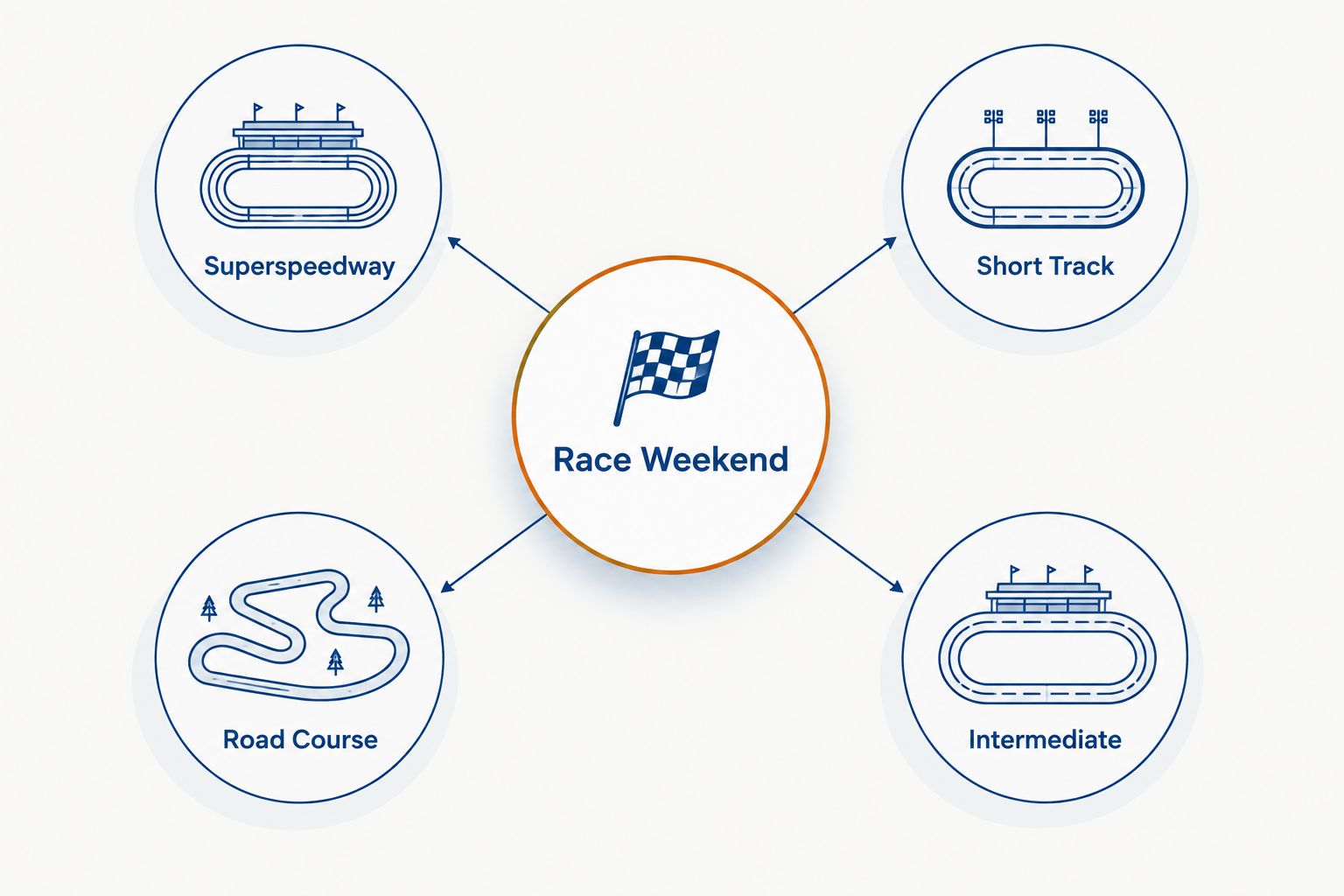
- Track type — superspeedway, short track, road course, or intermediate — decides which driver profile actually scores.
- Stage points and laps led swing weekly totals more than a single top-5 finish does.
- A value play who has finished top-10 at that specific track beats a pricier favorite with no history there.
Why lineup construction matters
NASCAR fantasy scoring rewards different behavior than watching a race for fun. A driver who finishes 15th but leads 40 laps and scores in both stages can outscore the race winner who started on pole and led one lap late. That gap is exactly why lineup construction for weekly races matters more than picking who you think crosses the finish line first.
The same logic that separates winning weekly lineups from the pack shows up across every individual-sport fantasy format — building a fantasy golf lineup for majors runs on the same scoring-format-first mindset, just with a different scoreboard. Ignore the format and you overpay for a name in 2026 the same way bettors overpaid for it in 2025.
How to build a NASCAR fantasy lineup for weekly races
- Set your cap and lock six drivers. $50,000 is the standard total across the major DFS sites for a single-race NASCAR contest.
- Identify the race's dominators — drivers with the equipment and track history to lead the most laps that week.
- Pair one or two dominators with three or four value plays priced well under their season-long average finish.
- Check qualifying position before final lock. Start position feeds directly into position-differential scoring.
- Weigh manufacturer alliances. Teammates sharing setup data often run in the same tier at the same track.
- Confirm weather and practice notes. A rain-shortened race compresses the value of laps-led props for everyone in the field.
Salary cap format: $50,000 across six drivers
This is the format most weekly NASCAR DFS players build for. You get $50,000, you pick six drivers, and you cannot exceed the cap. The winning move is almost never six mid-tier drivers — it's one or two priced dominators next to three or four drivers cheap enough to leave room for the studs.
Full-field pick format: rank every driver, no salary cap
Some weekly leagues skip the cap entirely and have you rank the whole field from first to last, scoring on how close your ranking lands to the actual finishing order. There's no $50,000 ceiling here — the skill shifts from squeezing value out of a budget to reading the entire 36- to 40-car field correctly, including the cars that finish 25th through 35th.
| Format | Salary cap | Roster size | Best for |
|---|---|---|---|
| Salary cap DFS | $50,000 | 6 drivers | Weekly single-race entries |
| Full-field pick 'em | None | Full field ranked | Season-long weekly leagues |
Why NASCAR fantasy value shifts week to week
- Track type: superspeedways reward drafting and pack racing; short tracks reward handling and consistency over 300+ laps.
- Qualifying position: starting up front caps your position-differential upside; starting mid-pack raises a value play's ceiling.
- Manufacturer alliance: teammates sharing simulation data often cluster in the same performance tier at a given track.
- Stage length: shorter stages compress laps-led opportunities into fewer cars, concentrating scoring at the front.
- Weather and cautions: rain delays and stage-ending cautions bunch the field and cut into a dominator's laps-led total.
- Practice speed: final practice speed charts are the clearest public signal of who actually has a fast car that week, before the green flag ever drops in 2026.
Stack your lineup the way you'd stack any correlated fantasy build. Draft one dominator built to lead laps and score in both stages, then build around him the way DFS stacks for NFL tournaments pair a quarterback with his receiver — correlated scoring, not just individual upside stacked at random. SportsOrca's race-week previews break down qualifying gaps and pit strategy before lineups lock, which is exactly the input a value play needs before you commit salary to it.
How many drivers do you need in a NASCAR fantasy lineup?
A NASCAR fantasy lineup for weekly salary-cap races needs six drivers, fit under a $50,000 cap. Full-field pick 'em formats skip the cap entirely and instead have you rank every driver entered in the race.
Is it better to draft favorites or underdogs in NASCAR DFS?
Neither wins on its own — the strongest NASCAR DFS lineups pair one favorite priced to lead laps with three or four underpriced drivers who have finished top-10 at that specific track before. A lineup of six favorites burns too much of the $50,000 cap and leaves zero room for value.
Do stage points matter more than the race finish in fantasy scoring?
Stage points often matter more than the final finish because they reward consistency across the whole race, not just the closing laps. A driver who finishes 12th but scores in both stages can out-total a driver who finishes 8th but never cracked the top 10 during either stage.
Get race-week driver breakdowns
SportsOrca previews qualifying, track history and pit strategy before lineups lock.
FAQ
What's the best NASCAR DFS strategy for a superspeedway race?
On a superspeedway, prioritize drivers with pack-racing history and manufacturer support over drivers with the best season-long average finish. Plate-track chaos flattens the field, so a mid-priced driver who avoids the wreck often outscores a favorite caught in it.
Is stacking multiple drivers from one manufacturer a good NASCAR fantasy move?
Stacking two drivers from the same manufacturer can work when that manufacturer's cars have shown a clear speed edge in practice that week. It's the same correlated-scoring logic behind stacking a quarterback with his top receiver in NFL DFS.
How much does starting position affect NASCAR fantasy scoring?
Starting position feeds position-differential scoring directly — a driver who starts 25th and finishes 10th earns more differential points than one who starts 5th and finishes 3rd. That's why value plays who qualify poorly but run well are prized in weekly lineups.
What's the difference between a dominator and a value play in NASCAR fantasy?
A dominator is a driver priced high because he's expected to lead the most laps and score heavily in both stages. A value play is a cheaper driver whose price doesn't reflect his real chance at a top-10 finish, freeing up salary for the dominator.
Should you fade the pole-sitter in NASCAR DFS?
Often, yes — the pole-sitter is usually the highest-priced driver on the slate but can only lose position-differential points, never gain them. Fading him frees cap space for a value play who can score on both ends of the position-differential formula.
How much does weather affect a weekly NASCAR fantasy lineup?
Rain delays and shortened races cut into a dominator's laps-led total by simply removing laps from the race. Building a lineup with drivers who start up front matters more on a weather-shortened Sunday than it does over a full 500-mile distance.
What's the standard salary cap for a NASCAR DFS lineup in 2026?
The standard salary cap for a NASCAR DFS lineup in 2026 is $50,000 across six drivers on the major weekly contest sites. Full-field pick 'em leagues use no cap at all.
One last thing
The pole-sitter trap catches more weekly players than any other mistake: he's priced like a lock but structurally can only lose position-differential points, never gain them. Build your six-driver, $50,000 lineup around drivers who can score on both ends of that formula in 2026, and the pole-sitter becomes a fade, not a foundation.