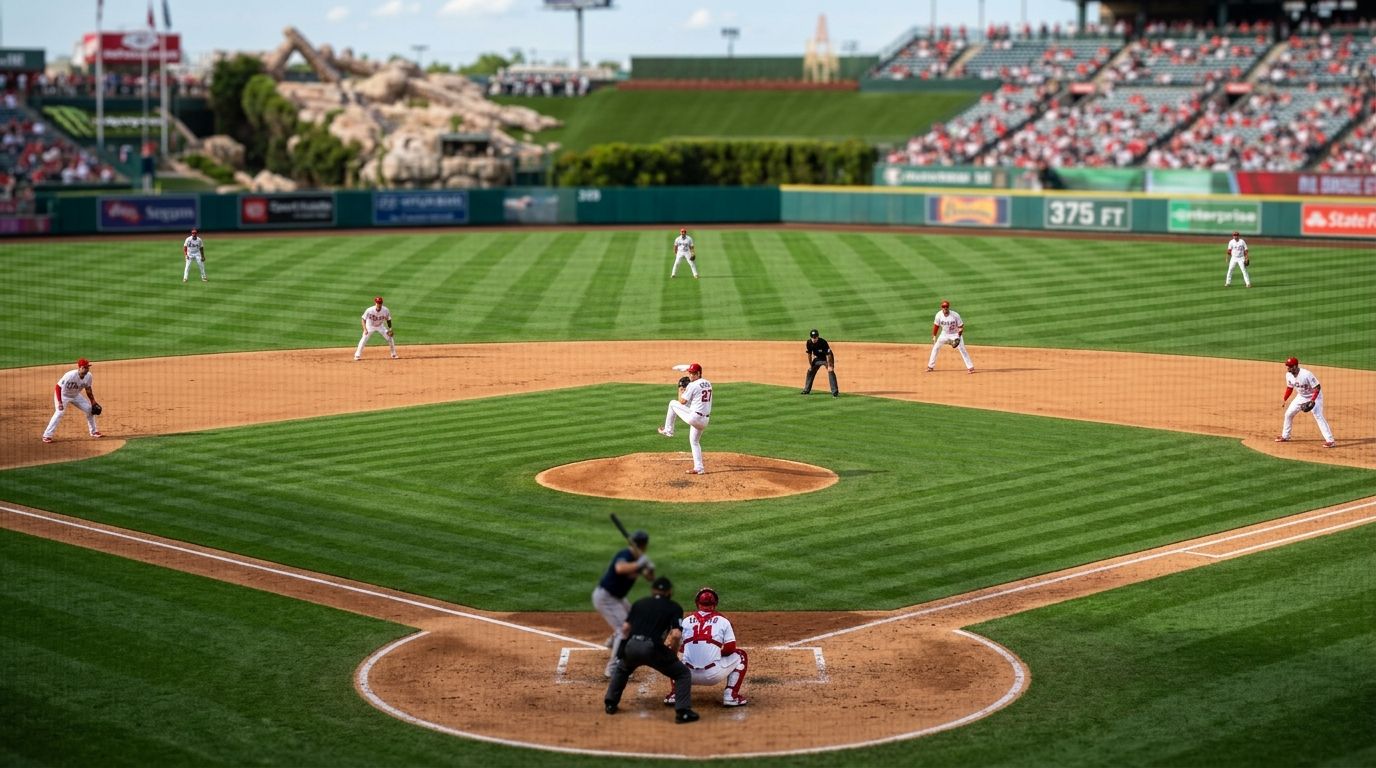
Baseball positions explained for new fans starts with nine spots on the field, each with a distinct job, and one rule that decides whether you follow the game or just watch it happen: know the number, know the job. A shortstop and a second baseman look similar from the upper deck until you understand why one covers more ground toward third and the other turns double plays toward first.
- Baseball positions explained simply: nine spots on the field, numbered 1 through 9 for scorekeeping.
- The battery — pitcher and catcher — controls every pitch before the other seven positions move.
- New fans in 2026 should track one position per game before following all nine at once.
- Fantasy baseball rosters and Gold Glove ballots reward position-specific skills, not just batting stats.
Why baseball positions matter for new fans
A new fan who doesn't know positions watches the ball. A fan who knows positions watches the decisions before the ball moves — the shift, the shortstop cheating toward second, the outfielder playing shallow because the batter is a slap hitter. That's the difference between watching baseball and reading it.
Broadcasts lean on position numbers constantly. A 6-4-3 double play means shortstop to second base to first base, and if you don't have that numbering memorized, half the graphics on your screen during a 2026 broadcast are noise. Box scores, scorecards, and defensive stat sheets all use the same 1-through-9 system, so learning it once pays off across every game you watch this season.
The catcher, not the pitcher, runs the defense pitch to pitch — new fans who skip that fact end up crediting the wrong player for half the outs on the field.
Learn the battery first: pitcher and catcher
The pitcher (position 1) and catcher (position 2) are called the battery because every play starts with them. Get this pair down before touching the rest of the diamond. More MLB breakdowns like this sit on the SportsOrca front page.
- The pitcher throws from a mound 60 feet 6 inches from home plate and controls the pace of the entire game.
- The catcher squats behind the plate, calls pitches, and is the only defender facing the whole field.
- Pitch counts and velocity readings on screen belong to the pitcher; passed balls and stolen-base rates belong to the catcher.
- A catcher's arm strength shows up in caught-stealing percentage, a stat worth tracking on its own.
- Relief pitchers rotate in later innings, so the pitcher's spot changes hands more than any other position in a single game.
Map the infield: first, second, third, shortstop
Four infielders cover the dirt inside the baselines, and each has a different assignment depending on where the ball is hit.
- First base (3) handles the most throws per game because most groundouts end there.
- Second base (4) turns double plays and covers the bag on steal attempts from the right side.
- Shortstop (6) covers the most ground of any infielder and fields the most difficult chances.
- Third base (5) is nicknamed the hot corner — reaction time matters more there than range.
- Watch where the shortstop and second baseman stand before the pitch; their positioning tells you the scouting report on the hitter.
Map the outfield: left, center, right
Three outfielders cover the grass behind the infield, and their jobs split by speed and arm strength rather than by side of the field.
- Center field (8) goes to the fastest defender because it covers the most territory.
- Left field (7) and right field (9) split by arm strength, with the stronger arm usually in right to cut down runners at third.
- Reading the ball off the bat matters more than raw speed once a fly ball is in the air.
- Corner outfielders see more foul-ball action and more throws to third base than center fielders do.
Decode the scorecard numbers
Every position has a number that never changes, no matter who plays it, and every scorecard and stat sheet uses it.
- 1 is pitcher, 2 is catcher, 3 is first base, 4 is second base, 5 is third base.
- 6 is shortstop, 7 is left field, 8 is center field, 9 is right field.
- A 6-4-3 notation on a scoreboard means shortstop to second to first, a standard double play.
- Learning these nine numbers is the single fastest way to make a box score readable.
Track the stats that separate elite defenders
Position knowledge gets sharper once you attach numbers to it. Exit velocity and barrel rate explain why certain hitters produce contact that tests outfield range and infield reflexes differently than routine grounders.
- Range factor and defensive runs saved separate strong infield defenders from average ones.
- Caught-stealing percentage is the catcher's headline defensive stat.
- Outfield assists track arm strength directly — a low total can mean runners stopped testing the arm, not that it's weak.
- Gold Glove balloting weighs advanced defensive numbers alongside the eye test every season.
Watch one position per game before trying all nine
New fans burn out trying to track every position at once across a three-hour game. Pick one position per broadcast instead.
- Watch the shortstop for one full game and note how often the ball actually finds them.
- Watch the catcher's setup before each pitch the next game to spot pitch-calling patterns.
- Rotate through all nine positions over nine broadcasts and the whole field starts making sense together.
Apply position knowledge to fantasy rosters
Fantasy baseball forces you to think in positions immediately, since rosters require specific slots to fill. Scanning fantasy baseball waiver pickups for category leagues shows which positions are scarce and why that scarcity exists on the real diamond too.
- Middle infielders (shortstop, second base) are typically the shallowest position pool in most leagues.
- Catchers get scored differently in many formats because the physical toll of the position limits playing time.
- Corner outfield spots tend to run deeper than center field in most player pools.
Get more MLB breakdowns
Position guides, stat explainers, and season coverage in one place.
Position comparison for new fans
| Position | Best for (what to watch first) | Primary skill | Common misconception |
|---|---|---|---|
| Pitcher (1) | Pitch counts and velocity readouts | Command and arm strength | That velocity alone wins games |
| Catcher (2) | Pitch-calling patterns | Game-calling and blocking | That the job is just receiving pitches |
| First base (3) | Stretch plays on close throws | Footwork and reach | That it's the easiest infield job |
| Second base (4) | Double-play turns | Range and pivot speed | That arm strength doesn't matter there |
| Third base (5) | Reaction plays on hard-hit balls | Reflexes and arm strength | That it's less demanding than shortstop |
| Shortstop (6) | Positioning shifts before the pitch | Lateral range and arm | That any infielder can play it |
| Left field (7) | Reading fly balls off the bat | Read and closing speed | That outfield is a rest position |
| Center field (8) | Ball-tracking on deep drives | Top-end speed and range | That it's only about foot speed |
| Right field (9) | Throws that cut down runners at third | Arm strength | That right field hides a weak defender |
Every one of these nine positions earns a Watch verdict for a new fan in 2026 — none are safe to skip, since scorecards and broadcast graphics assume you know all nine.
Common mistakes new fans make
- Confusing shortstop and third base responsibilities — shortstop covers more ground toward second, third base reacts to hard-hit balls from closer range.
- Assuming the pitcher controls the whole defense — the catcher calls most pitches and directs positioning between pitches.
- Ignoring outfield arm strength — a quiet assist total can mean runners stopped running, not that the arm is weak.
- Treating the DH as a tenth fielder — the designated hitter bats but takes no defensive position, a distinction that trips up fans watching in 2026.
- Skipping the scorecard numbers entirely — without 1 through 9 memorized, in-game graphics and box scores stay unreadable all season.
FAQ
What are the 9 baseball positions and their numbers?
The nine baseball positions are pitcher (1), catcher (2), first base (3), second base (4), third base (5), shortstop (6), left field (7), center field (8), and right field (9). Scorecards and broadcasts use these numbers instead of names when describing defensive plays.
What is the hardest baseball position to play?
Catcher and shortstop are widely considered the most demanding. Catchers absorb physical wear every game while calling pitches, and shortstops handle the most difficult defensive chances in the infield.
Is shortstop or second base more difficult?
Shortstop is generally considered harder because it covers more ground and makes longer throws to first base. Second base demands a faster reaction on the double-play pivot but shorter throws.
Why is the pitcher position number 1?
Early scorekeeping conventions assigned numbers based on standard field positioning, starting with the pitcher. That order has stayed unchanged for well over a century, which is why the system still works in 2026.
Does the designated hitter play a defensive position?
No, the designated hitter only bats and never takes the field. That is why a lineup can list ten names while only nine players hold defensive positions.
What position should a new fan learn first?
Start with the battery, meaning pitcher and catcher, because every play begins with them before the other seven positions react. Learn the infield next, then the outfield.
How many outfielders are there in baseball?
There are three outfielders: left field, center field, and right field, numbered 7, 8, and 9. Center field usually goes to the fastest defender because it covers the most ground.
What does a 6-4-3 double play mean?
A 6-4-3 double play means the shortstop fields the ball, throws to the second baseman, and the second baseman relays to first base for two outs. It is one of the most common defensive sequences in baseball.
One last thing
The position numbers you're learning right now predate almost everything else about modern baseball — the numbering has stayed identical while gloves, stadium dimensions, and pitch-tracking technology all changed completely. Learn the nine numbers once in 2026 and every scorecard, broadcast graphic, and defensive stat sheet you see for the rest of your fan life uses the same code.