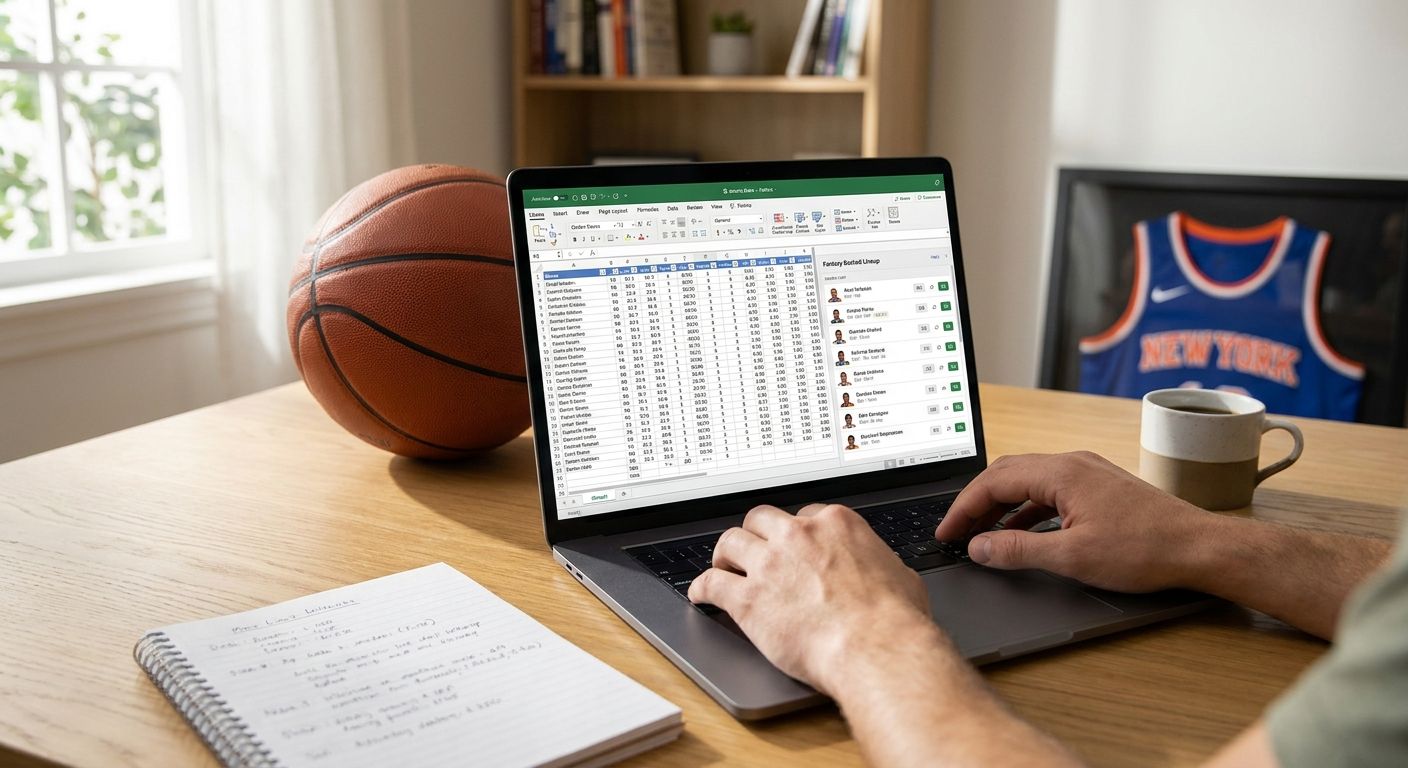
NBA cash game lineup strategy is a different sport from tournament DFS — it's built around minute floors and repeatable scoring instead of boom-or-bust ceiling plays. In a 50/50 or double-up, you're not trying to out-score a field of thousands; you're trying to clear roughly the top half of entries, and that changes almost every roster decision you make.
- DFS lineup strategy for NBA cash games in 2026 rewards floor, not ceiling — prioritize 30+ minute locks over boom-or-bust upside.
- Studs-and-value builds beat pure punt strategies in 50/50s and double-ups because busted value plays sink your whole card.
- Target games with high Vegas totals for pace-driven minutes, and avoid lopsided spreads where stars sit in the fourth quarter.
- Check the injury report twice — once when you build, once again 30 minutes before lock — and use late swap to lock in floor.
Why lineup construction matters for NBA cash game players
Cash games pay out on a binary line: you clear it or you don't. There's no bonus for finishing first in a double-up the way there is in a guaranteed prize pool tournament, so a lineup full of safe, fantasy basketball waiver pickups with locked-in minutes beats a lineup full of high-ceiling names who might play 22 minutes or might play 34.
The math is simple once you say it out loud: a punt play that busts costs you the same points whether you're in a 50/50 or a 100-man tournament, but in cash games there's no other lineup in the field to bail you out with a huge score. A 48-minute NBA game only gives a player so many chances to accumulate points, and the players who reliably see 30-plus of those minutes night after night are the backbone of a cash roster across an 82-game season.
Lock in your highest-floor positions first
Build your point guard and center spots before anything else. These positions tend to carry the most stable minutes on most rosters, and locking them early keeps you from overpaying for a shooting guard rotation that shifts by the week.
- Check each player's last 10 games for minutes variance, not just points
- Favor starters on teams without a crowded bench rotation
- Avoid players coming off a recent DNP-rest unless the role is confirmed
- Skip anyone in a reported minutes restriction, even if the price looks cheap
- Prioritize a player with a locked starting role over a higher-upside bench scorer
Build around Vegas totals, not vibes
Game environment drives pace, and pace drives possessions. A game with a high total means more shots, more free throws, and more rebounding chances for everyone on the floor — that's a cash-friendly environment because it lifts the floor of role players, not just stars.
- Target the two or three highest-total games on the slate for your core plays
- Avoid heavy favorites in double-digit spread games — bench units eat garbage time
- Cross-check pace numbers against injury news; a missing starter can spike a teammate's usage
- Treat home/road splits as a tiebreaker, not a primary filter
Price down without punting your floor
Every cash lineup needs salary relief somewhere, but the difference between a smart value play and a punt is whether the player has a defined role. A $4,000 player locked into 28 minutes beats a $3,200 player who might play 12 or might play 24.
- Look for players who moved into the rotation due to an injury elsewhere on the roster
- Prioritize combo guards who can rack up assists even in a quiet scoring night
- Avoid rookies or bench pieces whose minutes swing with coach's mood, not matchup
- Check recent box scores for a role change, not just the season-long average
Check the injury report twice before you lock
The single biggest cash-game leak isn't a bad process — it's outdated information. Line up your roster hours before tip, then run the injury report again 30 minutes before lock, because late scratches reshuffle minutes fast.
- Confirm starting lineups the moment they're announced, not before
- Watch for a questionable tag that flips to out right at the deadline
- Track which backup absorbs the extra minutes historically, not just who's next on the depth chart
- Use SportsOrca's Sixth Man of the Year caliber bench scorers coverage to spot bench players already primed for a bigger role
Find tonight's value plays faster
See which bench players are trending toward bigger roles before you lock your lineup.
Avoid back-to-back fatigue spots
Teams manage minutes more aggressively on the second night of a back-to-back, especially with veterans. A player who normally logs 34 minutes can quietly drop to 27 on zero rest, and that swing tanks a cash lineup that was priced around his season average.
- Cross-reference the schedule for any player on a second-game-in-two-nights slate
- Treat load management risk as a red flag for anyone 30 or older
- Favor teams coming off a rest day over teams playing their third game in four nights
- Downgrade role players on back-to-backs even if the starter is confirmed to play
Use ownership as a tiebreaker, never a driver
Ownership percentage matters far more in tournaments than in cash games, where you're not trying to differentiate from a massive field. Don't fade a strong play just because it looks chalky — a high-floor player being popular doesn't make him a worse cash-game option.
- Break ties between two similarly-priced players using recent role stability, not projected ownership
- Don't force a contrarian pivot in a cash lineup purely to be different
- Save true contrarian, low-owned plays for GPP-style tournament entries instead
Late-swap before lock
Most major DFS sites let you swap players in games that haven't tipped yet, even after the slate technically locks for early games. Use that window to react to real news instead of guessing hours in advance.
- Hold one or two swap-eligible players in late-slate games as insurance
- Swap out anyone who took an unexpected DNP in an early game and freed up salary logic elsewhere
- Re-check pace and total shifts if a star sits and a game environment changes
Cash game build comparison
| Build Type | Best For | Key Limitation |
|---|---|---|
| Floor-Max Build | Double-ups and 50/50s where you need to clear the cash line, not chase a top score | Caps upside if the slate turns into a shootout |
| Studs-and-Value Build | Single-entry cash lineups on 4-6 game slates | Value plays can get pulled early in a blowout |
| Pace-Total Build | Head-to-head cash games on nights with multiple high-total games | Overexposed if a featured game gets postponed |
| Back-to-Back Fade Build | Cash lineups built to dodge rest-day risk | Thins the usable player pool on light slates |
Every one of these builds still comes back to the same rule for 2026: cash games pay for floor, not for a career night.
Common mistakes NBA cash game players make
- Running GPP-style stacks and correlation plays into 50/50s, chasing a ceiling nobody needs to clear the cash line
- Ignoring blowout risk in lopsided spreads, where stars sit the entire fourth quarter
- Overpaying for a "revenge game" or narrative angle instead of checking the actual minutes log
- Skipping the second injury check before lock and eating a last-minute scratch
- Entering the exact same roster into cash and tournament contests without adjusting for floor versus ceiling
FAQ
What's the best lineup strategy for NBA cash games in 2026?
Build around players with locked-in minutes of 30 or more rather than boom-or-bust scorers, since cash games only require clearing roughly the top half of the field, not the top spot. Prioritize pace and injury news over ownership percentage.
Is chalk good or bad for NBA cash game lineups?
Chalk is fine in cash games because you're not trying to differentiate from a large field the way you would in a tournament. A heavily-owned player with a stable role is often the safest cash play on the slate.
Does the injury report matter more in cash games than in GPPs?
Yes, because a single unexpected scratch can sink an entire cash lineup with no upside elsewhere to compensate. Check the report again 30 minutes before lock, not just when you first build the roster.
Should you punt a roster spot in cash games?
Punting works only when the cheap player has a confirmed role and real minutes, not just a low salary. A true punt with unclear playing time is one of the fastest ways to bust a cash lineup.
How many games should be on the slate for NBA DFS cash lineups?
Four to six game slates tend to concentrate ownership and minutes information more reliably, making floor projections easier to trust. Larger slates spread information thin and increase the chance of a surprise role change.
Is late swap worth using in NBA cash games?
Late swap is one of the highest-value tools available because it lets you react to confirmed lineups and injury news instead of locking a roster hours in advance. Hold at least one swap-eligible player in a later game whenever possible.
What's the difference between GPP and cash game DFS strategy?
GPP strategy chases a high ceiling through stacks and contrarian, low-owned plays because you need to beat thousands of entries. Cash strategy chases a stable floor because you only need to beat roughly half the field.
Do back-to-backs matter for NBA cash game lineups?
Back-to-backs matter significantly because teams often reduce a veteran's minutes on the second night of a back-to-back, shrinking his scoring floor. Downgrade any player on a back-to-back unless his role is explicitly confirmed.
One last thing
The most overlooked cash-game floor play every season isn't the leading scorer on a good team — it's the backup point guard who inherits real minutes the moment a starter sits, because that role shift shows up in the box score before it shows up in the public consciousness. Watching depth-chart movement across the 82-game season, not just tonight's slate, is what separates cash-game regulars from players who get burned by a single scratch.