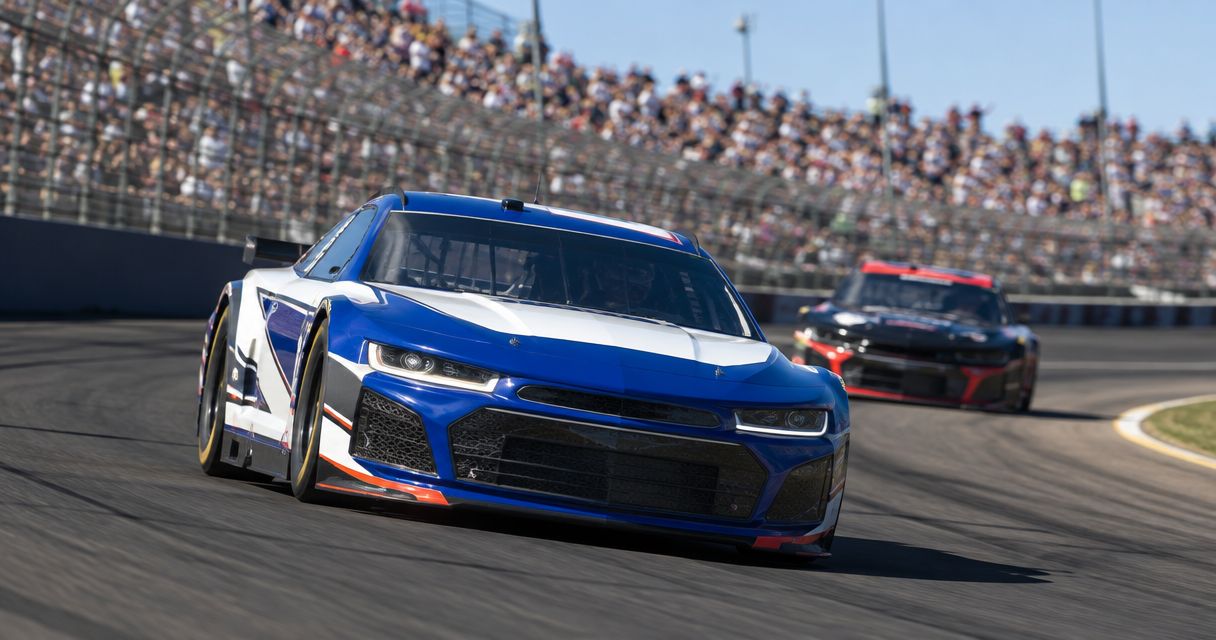
Best overall: superspeedway longshots. Best for season-long discipline: top-10 finish props. Best selective option: road-course specialists. SportsOrca ranks superspeedway longshots first among NASCAR underdog bets in 2026 because drafting reduces the equipment gap and expands the number of drivers with a realistic path to the front.
- Superspeedway longshots are the best NASCAR underdog bets for outright-win upside in 2026.
- Top-10 finish props suit value bettors who want lower variance than outright winners.
- Road-course specialists become attractive when track history supports the driver, not merely the team.
- A long price is not automatically value; track fit and recent speed still decide the bet.
- Use fixed stakes because NASCAR crashes and mechanical failures can erase a sound handicap.
Why this matters
NASCAR creates an unusual underdog market. One crash, caution or late restart can move a driver from the middle of the field into contention, but random outcomes do not make every longshot valuable.
The strongest bets connect the price to a specific path: drafting help at Daytona or Talladega, braking skill on a road course, short-run speed before a late restart or a top-10 prop that does not require the driver to win. The same discipline applies to any underdog moneyline bet: identify how the upset happens before deciding whether the potential return justifies the risk.
SportsOrca's 2026 NASCAR underdog bet ranking focuses on repeatable angles rather than unsupported weekly picks. Entry lists, starting positions and current odds change by race, so each recommendation below tells you what evidence must appear before the bet qualifies.
What makes the best NASCAR underdog bet
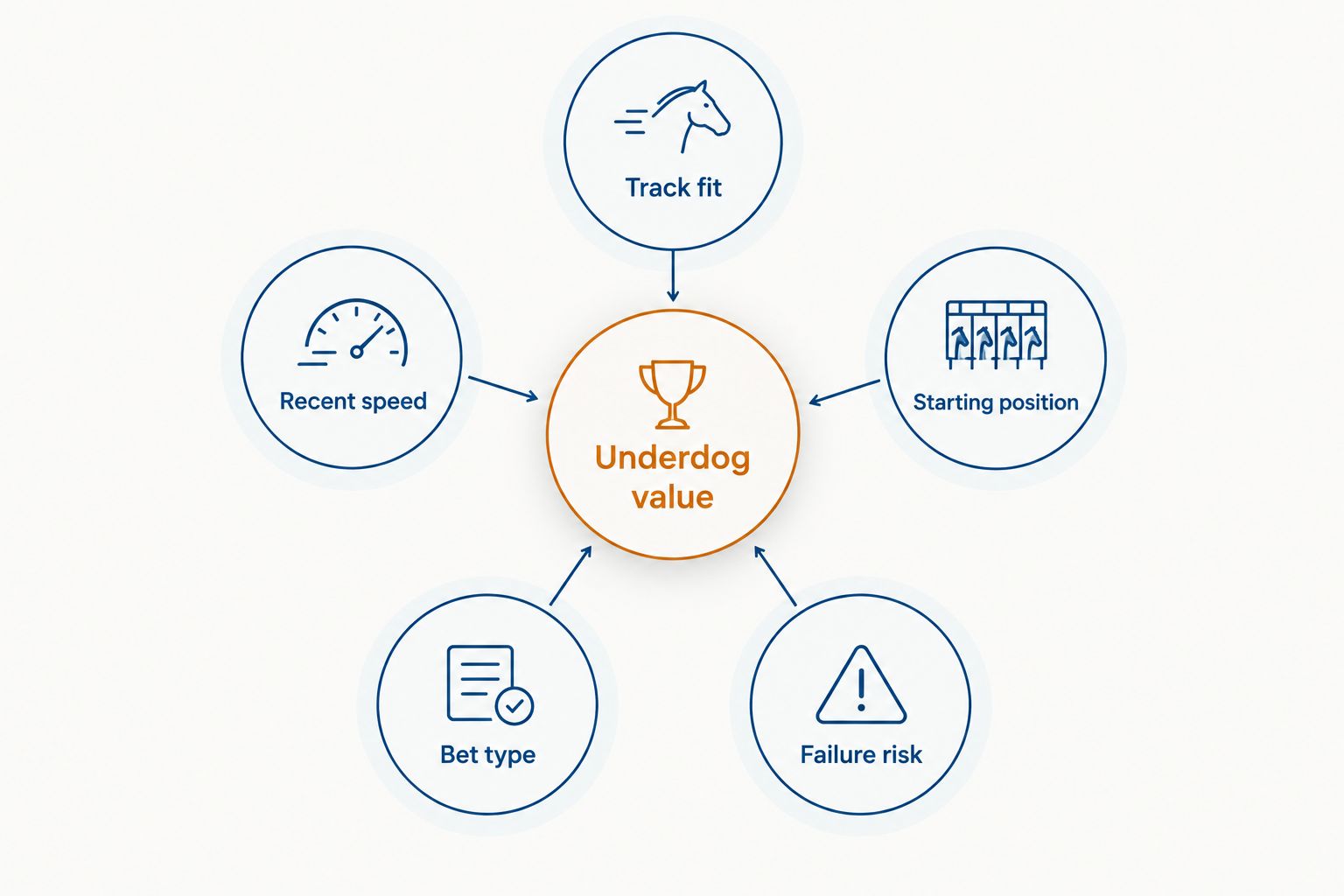
- Track fit: Daytona, Talladega, Martinsville and Sonoma demand different strengths. A driver's season average cannot replace track-specific analysis.
- Recent speed: Practice pace, qualifying performance and recent finishes show whether the car can stay near the lead group.
- Starting position: A deep start creates traffic and incident risk. It can also improve a finishing-position line if the driver has enough speed to advance.
- Drafting or restart position: Superspeedway bets need drafting partners. Short-track bets need a car that fires well over short runs.
- Bet type: Outright winners offer the largest upside, while top-10 and matchup markets provide wider paths to a winning ticket.
- Failure risk: Crashes, pit-road penalties and mechanical trouble remain live on every lap. Stake size must reflect that variance.
These criteria separate a genuine underdog from a familiar name carrying an attractive-looking number. The price matters only after the race conditions establish a credible route to the result.
NASCAR underdog bets at a glance
| Rank | Bet type | Best for | Standout feature | Key limitation |
|---|---|---|---|---|
| 1 | Superspeedway longshots | Outright-win upside | Drafting compresses the field | Major crashes can remove several contenders together |
| 2 | Top-10 finish props | Lower-variance betting | The driver does not need to win | Smaller upside than an outright winner |
| 3 | Road-course specialists | Track-specific skill | Braking and corner execution matter heavily | The angle applies only on relevant circuits |
| 4 | Short-track restart threats | Late-race position gains | Short-run speed can decide the finish | Traffic and contact create heavy variance |
| 5 | Playoff cutoff drivers | Elimination-race aggression | Strategy changes when advancement is at stake | Desperation also increases incident risk |
| 6 | Part-time and series call-ups | Selective surprise value | Limited Cup data can create uncertainty | Thin evidence makes the angle difficult to repeat |
1. Superspeedway longshots: best for outright-win upside
Daytona and Talladega create the strongest environment for NASCAR underdog bets. Daytona measures 2.5 miles, Talladega measures 2.66 miles, and both tracks rely heavily on drafting packs that keep large groups within reach of the lead.
Recent history shows the underdog path clearly. Michael McDowell won the Daytona 500 in 2021 for Front Row Motorsports. Ricky Stenhouse Jr. won the same race in 2023 for JTG Daugherty Racing. Justin Haley won the rain-shortened Daytona summer race in 2019 for Spire Motorsports.
Those results do not mean every longshot deserves a bet. The driver still needs drafting help, a car that can remain stable in traffic and enough track position to avoid spending the final stage trapped at the back.
Superspeedway longshots pros:
- Drafting reduces the effect of single-car speed differences.
- Late restarts can bring more drivers into winning range.
- Recent Cup history provides clear underdog-winning examples.
- Outright markets offer the largest upside in this ranking.
Superspeedway longshots cons:
- One multi-car crash can eliminate a strong selection instantly.
- Drivers can lose the lead when drafting partners switch lanes.
- Qualifying speed reveals less than it does at many other tracks.
Best for: Value bettors accepting high variance for outright-win potential.
Superspeedway longshots verdict: Buy when the driver can stay in the main draft and has shown controlled pack-racing decisions.
At Daytona and Talladega, the draft shrinks the equipment gap but never removes crash risk.
“At Daytona and Talladega, the draft shrinks the equipment gap but never removes crash risk.”
2. Top-10 finish props: best for lower-variance betting
A top-10 finish prop gives an underdog several ways to cash. The driver can run near the front all afternoon, gain positions through pit strategy or survive late attrition without needing to beat every car in the field.
This market fits bettors who find an underrated driver but cannot justify an outright-win ticket. It also makes the handicap easier to audit: compare recent top-15 pace, starting position, track history and the likelihood that the driver stays on the lead lap.
Top-10 finish props pros:
- The selection can cash without leading the final lap.
- A wider result range lowers variance compared with an outright winner.
- The angle works across more track types than superspeedway-only bets.
- It fits a structured sports betting bankroll better than repeated longshot chasing.
Top-10 finish props cons:
- The upside is lower than an outright-win bet.
- A late restart can turn a strong run into a finish outside the top 10.
- Market value disappears when recent results inflate expectations.
Best for: Bettors seeking repeatable NASCAR underdog bets across the 2026 schedule.
Top-10 finish props verdict: Buy when the driver shows top-15 speed and the market still treats a top-10 result as unlikely.
3. Road-course specialists: best for track-specific skill
Road courses shift attention from sustained oval speed to braking points, corner entry, tire management and avoiding penalties. A driver with a verified road-racing record can outperform the expectations created by ordinary oval results.
AJ Allmendinger provides the clearest modern example. His Cup victories at Watkins Glen in 2014, the Indianapolis road course in 2021 and the Charlotte Roval in 2023 show why track type must carry more weight than a full-season average.
The mistake is betting a recognizable road racer without checking current form. Prior success identifies the skill; practice, qualifying and recent reliability determine whether the 2026 entry can convert it.
Road-course specialists pros:
- Track-specific driver skill can outweigh broader season results.
- Previous road-course performance gives the handicap relevant evidence.
- Strategy and clean execution create several routes to a strong finish.
Road-course specialists cons:
- The angle applies to a limited part of the schedule.
- Pit penalties can destroy track position on circuits where passing is difficult.
- Historical reputation can shorten the market before the race begins.
Best for: Selective bettors who wait for road-course weekends and verify current speed.
Road-course specialists verdict: Hold until practice and qualifying confirm that the car supports the driver's established skill.
4. Short-track restart threats: best for late-race position gains
Martinsville and Bristol put traffic, tire behavior and restart execution at the center of the handicap. An underdog with strong short-run speed can gain several positions after a late caution even without owning the fastest car over a long green-flag run.
Watch how the driver performs over the first laps after restarts. A car that gains immediately but fades later can still suit a top-10 prop if repeated cautions keep resetting the race.
Short-track restart threats pros:
- Late cautions can create immediate position changes.
- Short-run speed is visible during the race rather than inferred from reputation.
- Matchup and finishing-position markets can fit the angle better than an outright winner.
Short-track restart threats cons:
- Contact and traffic make clean projections difficult.
- Pit-road position can matter as much as raw speed.
- Long green-flag runs expose cars that fade on older tires.
Best for: Bettors evaluating live race conditions and restart performance.
Short-track restart threats verdict: Hold before the race and Buy only when short-run speed becomes clear.
5. Playoff cutoff drivers: best for elimination-race aggression
A playoff cutoff race changes the decisions facing drivers near the elimination line. Stage points become urgent, pit strategy becomes more aggressive and a driver who needs a win has little reason to protect a safe but insufficient finish.
Ross Chastain's wall-riding move at Martinsville in 2022 remains the defining example. The move carried him past enough cars to advance to the Championship 4, showing how playoff pressure can produce a decision that would make little sense in an ordinary race.
Aggression is not automatically positive for a bet. The same urgency that creates upside increases the chance of contact, a penalty or a failed strategy call.
Playoff cutoff drivers pros:
- Advancement scenarios clarify each driver's strategic objective.
- Stage racing can reveal urgency before the final laps.
- Win-or-advance pressure creates upside beyond ordinary projections.
Playoff cutoff drivers cons:
- Aggressive strategy increases failure risk.
- Some drivers need points rather than a win, reducing outright value.
- The angle depends on exact standings entering the race.
Best for: Bettors who calculate each driver's advancement path before making a selection.
Playoff cutoff drivers verdict: Hold until the points situation establishes whether aggression helps the bet.
6. Part-time and series call-ups: best for selective surprises
Drivers making a limited Cup start can be difficult to price because their recent results come from another series or a small Cup sample. That uncertainty sometimes creates value, especially when the driver has relevant experience at the track.
The evidence threshold must be high. Lower-series success does not erase differences in Cup traffic, pit execution or car preparation, and an unfamiliar driver should never become a bet solely because the market offers a long number.
Part-time and series call-ups pros:
- Limited Cup data can create disagreement in the market.
- Track-specific experience can reveal a narrow betting case.
- Matchup markets can provide an alternative to an unlikely outright win.
Part-time and series call-ups cons:
- Small samples weaken projections.
- Team preparation and pit execution are difficult to judge.
- Lower-series performance does not transfer evenly to Cup racing.
Best for: Bettors willing to wait for a rare combination of track history and current speed.
Part-time and series call-ups verdict: Wait for qualifying and practice evidence; otherwise, skip the bet.
How SportsOrca ranked these bets
SportsOrca's ranking applies the six stated criteria to each bet type: track fit, recent speed, starting position, drafting or restart position, market type and failure risk. Repeatability breaks close calls, but a limited angle can still rank first when its race environment creates a stronger underdog path.
No category receives credit simply for offering a large potential return. The bet must explain how the driver reaches the required finish and which race conditions can break that path.
Which NASCAR underdog bet should you choose?
Choose top-10 finish props as the default 2026 strategy. They apply across more tracks and do not require an underdog to defeat the entire field.
Move to superspeedway outright winners when Daytona or Talladega creates a credible drafting path. Use road-course specialists selectively, hold short-track bets until restart speed becomes visible and skip part-time entries when the case depends only on a long number.
SportsOrca's NASCAR underdog bets verdict is simple: bet the path, not the payout. A smaller-looking opportunity backed by track fit and current speed is stronger than a dramatic longshot with no clear route forward.
FAQ
What are the best NASCAR underdog bets in 2026?
Superspeedway longshots offer the best outright-win upside, while top-10 finish props provide the strongest lower-variance option in 2026. The right choice depends on whether you prioritize potential return or repeatability.
Why do NASCAR underdogs perform well at Daytona and Talladega?
Drafting keeps large groups of cars close together at Daytona and Talladega. That reduces the effect of isolated speed differences, although crashes still create major risk.
Are top-10 props better than betting a NASCAR underdog to win?
Top-10 props are better for lower variance because the driver can cash without winning the race. Outright bets suit bettors willing to accept a much narrower path to success.
How do you identify a NASCAR road-course underdog?
Start with verified road-course results, then check current practice pace, qualifying position and reliability. Historical skill matters only when the present car can keep the driver within contention.
Should you bet NASCAR underdogs before or during the race?
Pregame markets fit superspeedway and road-course research, while live markets reveal restart speed, tire falloff and changing strategy. Never chase a live bet merely because an earlier selection is losing.
Does starting position matter for NASCAR underdog bets?
Starting position matters because deep traffic increases incident risk and makes track position harder to recover. It can also create finishing-position value when a fast driver qualifies poorly.
What makes a longshot a value bet instead of a gamble?
A value bet has a credible path supported by track fit, current speed and the selected market. A large potential return without that evidence is only a long price.
How should value bettors manage NASCAR betting risk?
Use a fixed stake, separate outright bets from lower-variance props and never increase a wager to recover a previous loss. NASCAR variance makes consistent staking essential.
One last thing
The underdog does not need the fastest car all weekend. The underdog needs the right car for the decisive phase: stable in the Daytona draft, sharp over a Martinsville restart or clean under braking on a road course.
That distinction drives SportsOrca's 2026 NASCAR underdog bets. Judge the moment that will decide the race, then select the market that gives the driver enough ways to reward the read.